|
| Charity (top) |
Question: |
While leaving the church last Sunday, I noticed that we have a gold-plated Gospel Book cover on the “Wish List”. Shouldn’t we be using our money to help the poor and destitute instead?
| | Answer: | Thank you for this question – I was hoping that someone would ask it!
Without a doubt we, as a church, should be engaged in charity. In the Scriptures, the very word for “charity” means “love”, and since “God is love” the primary work of the Christian is charity. One only needs to remember the words of St. Paul in 1 Corinthians, “though I speak with the tongues of men and of angels… and though I understand all mysteries and all knowledge; and though I have all faith, so as to move mountains, and do not have charity, I am nothing.”
However, then St. Paul says something which might be a little surprising, he says, “and though I give out all my goods to feed the poor… and have not charity, I am profited nothing.” Why would St. Paul says this? Well, one answer is that St. Paul is talking about the need to have the right intentions when helping the poor - one must help the poor out of love. No doubt, this is definitely true, but perhaps St. Paul talking about something more as well.
If we consider the Gospel message in its entirety, in its fullness, as St. Paul always does, we would have to acknowledge that charity is about more than meeting people’s temporal needs, no matter how poor or destitute they may be. Real charity is about meeting their eternal needs as well. This is why Christ, when healing the physical infirmities of the people, always took more care for their spiritual restoration and healing. Christ’s primary focus was to raise mankind from earth to heaven, to impart forgiveness and reconciliation with God. And to this day, the Church, in continuing the Lord’s ministry, follows His example. This is why the Church’s primary objective is not to end world hunger or find cures for diseases (as good as these things may be), the Church’s primary objective is to save souls, to bring all of mankind into the Kingdom of God, making each and every person joint heirs with Christ of the Father’s eternal inheritance.
And so, when we see our churches adorned with beauty and splendor, it is so that both the poor and rich alike might glimpse something of the eternal inheritance which awaits them, should they be willing to leave the transitory behind and enter into the joy of their Father’s House. The famous Russian writer, Dostoyevsky, talking about the power of beauty to inspire man, went so far as to say that "beauty will save the world." Similarly, the Church teaches that without this vision of the glory of God and the beauty of His Kingdom, we will lack direction in our lives, and even if our earthly needs are met, we will still suffer the loss of our souls. Perhaps, King Solomon, who constructed the first Temple with great glory as was commanded of him by God, said it best, “where there is no vision, the people perish.” (Proverbs 29:18)
On a practical note, all the liturgical items used in our church, while beautiful enough to convey something of God’s glory, are also of modest value (i.e. our chalice is gold-plated rather than solid gold). In this way, the Church, while focusing on what is most important, what is super-essential, still has funds to minister to the temporal and material needs of God’s people as well – Christian charity demands no less.
| | (top) |
|
|
| Death & Burial (top) |
Question: |
What is the Orthodox Church’s teaching on the cremation?
| | Answer: | The following is taken from the Greek Orthodox Archdiocese of America: “Because the Orthodox Faith affirms the fundamental goodness of creation, it understands the body to be an integral part of the human person and the temple of the Holy Spirit, and expects the resurrection of the dead. The Church considers cremation to be the deliberate desecration and destruction of what God has made and ordained for us. The Church instead insists that the body be buried so that the natural physical process of decomposition may take place. The Church does not grant funerals, either in the sanctuary, or at the funeral home, or at any other place, to persons who have chosen to be cremated. Additionally, memorial services with kolyva (boiled wheat) are not allowed in such instances, inasmuch as the similarity between the "kernel of wheat" and the "body" has been intentionally destroyed.”
Exceptions are made for circumstances where it may not be avoided (when civil authority demands it, or epidemics) or if it may be sought for good cause as determined by the local hierarch, but when a cremation is willfully chosen for no good cause by the one who is deceased, he or she is not permitted a funeral in the church and may also be permanently excluded from liturgical prayers for the departed.
| | (top) |
|
|
| Doctrine (top) |
Question: |
If God is one, how can Christians have so many varying and even conflicting positions on theological, social, and moral issues?
| | Answer: | Although the answer to this question is simple, it is not easily accepted, except by the humble. Quite simplely: God is truly one, but we are not yet fully one with Him. As St. Dorotheus of Gaza once said, we are as points along the perimeter of a circle and God is at the very center. As we draw closer to Him, we draw closer to one another, until finally we arrive at perfect union with Him and one another. The fact that we have conflicting positions on theological, social, and moral issues, should indicate to us that we need to draw closer to God, who alone can bring us closer together and make us one. This is the mission and activity of the Church, which has the Lord Jesus Christ as its center, focal point, and means of unity.
| | (top) |
|
Question: |
I feel very strongly about my own beliefs, why should I believe as the Church believes?
| | Answer: | Personal conviction is a key part of Christian development, however, just because we have strong feelings that we are correct does not make it so. I may feel very strongly that 2 + 2 = 4 (which of course it does) but it is not my strength of conviction that makes me correct. The real proof is found in the discipline of mathematics, and the common witness of all those who have passed the 1st grade. :)
In the sciences and in the spiritual life, we should be very careful not to verify our thoughts and beliefs by our own feelings and emotions. This is called “emotional reasoning”, an identified psychological pathology, and this can lead to spiritual delusion as well.
In the spiritual life, the safe way to truth, the sure way to acquire the seemingly intangible mind of the invisible Christ, is through the very tangible mind of the visible Church. It is only when we compare our personal understanding to the commonly held mind and consensus of the Church that we are able to discern whether what we believe is correct or not.
This is the very reason why St. Paul makes the connection between the mind of the Church and the mind of Christ; through the one we arrive at the other. This is because although distinct the two are actually intimately and perfectly connected. To show this unity, St. Paul speaks about Christ as the head and the faithful as the body. Just as a physical body has no mind without its head, so too the Church has no mind apart from Christ – the Church’s teachings are the Lord’s teachings.
It is through the unity of the Church that we can experience unity with God and with one another. But this unity only comes through the difficult road of repentance, which begins with the humility that perhaps we are not as connected to God as we might think or feel.
| | (top) |
|
Question: |
So are you saying that the consensus of the Church cannot be wrong? I have a real problem with that.
| | Answer: | In our fallenness, in our separation from God and one another, we all have become accustomed to going our own way, doing our own thing, and not being held in check by anyone, even at times God Himself. Although this is an unhealthy form of individuality and freedom, we justify this stance by claiming that all is relative; after all, we say, even if absolute truth exists, there is no way to verify it.
In His foreknowledge, God knew that this would be our problem. And in His love for mankind, He not only revealed Himself as absolute Truth, in the person of Jesus Christ, but He also set up His Church as ”the pillar and ground of the truth” (1 Timothy 3:15) in which dwells the Holy Spirit, who will “guide you into all truth” (John 16:13). When we see the Church’s divinely given claim to truth as tyranny, we tragically turn away from the leadership of God Himself. This ultimately will lead to separation from not only the Church but also separation from God – the one a visible sign of the other. Such division then becomes the greatest evidence of our self-direction. Unity, on the other hand, is the greatest proof of God’s leadership. This we see in the Lord’s Church, which Christ established “that all might be One”.
Therefore, we should test our relationship with God by comparing it to the relationship the Church has with God. Submitting to such a test is not giving in to human tyranny but rather humble recognition of the sovereignty of God the Father, the Incarnation of God the Son, and the indwelling of God the Holy Spirit within the Church. The Church then is not the problem; it is God’s answer to our problems.
| | (top) |
|
Question: |
Doesn’t the Church need to critically examine its core teachings in light of the changing world? Is the Church afraid of self-examination?
| | Answer: | Historically speaking, remember what happened when the Roman pope reevaluated and changed core teachings, forgetting his accountability to the consensus of the Church and Christ its head. This led to the Great Schism in the 11th century – the separation of Rome from the rest of Christendom, which remained united in Orthodoxy. Centuries later, when people realized the errors of Rome, they broke away from the pope and formed their own churches in what became known as the Protestant Reformation. Now, Western Christianity has some 30,000 divisions – all because of 1) not being afraid to change core teachings and 2) not being afraid to separate from the consensus.
In Orthodoxy, the core teachings are the Lord’s, who is “the same, yesterday, today and forever” (Hebrews: 13:8), and we guard these teachings through the consensus of the Church. It is incumbent upon everyone to examine the teaching of the Church not in order to redefine it according to one’s own personal beliefs or the changing fads of the world; just the opposite. Examination of Church teaching is made to make sure that the current teaching corresponds perfectly to the unchanging consensus of the Apostles, bishops, priests and laity – a unity spanning across time and space, shared between the creation and the Creator. Therefore, the reason we don’t change the teaching is because we don’t want to break our union with God and one another, not because we are afraid of self-examination. Our understanding of self-examination is much more properly placed on the personal level where it belongs. We examine ourselves to see if we are conforming ourselves to Christ through His Church. We examine ourselves to see if we are overcoming divisions through repentance (changing our minds, hearts, and lives), or conversely if we are increasing divisions through our unwillingness to be changed and conformed to Christ, who alone is the focal point of all unity.
| | (top) |
|
Question: |
What is the doctrine of the Incarnation and why is it important?
| | Answer: | The doctrine of the Incarnation is that the uncreated the Son of God has entered into creation, taking on flesh and becoming the prophesied Son of Man, the Savior of the world. The doctrine says that Christ is a single person with two natures, divine and human; being both perfectly and fully God, while at the same time perfectly and fully man.
The term used in the Nicene Creed to describe the relationship between God the Father and the Son of God is homoousios – meaning of the same substance. In other words, as the Father is truly God, so is the Son truly God – both being fully divine. In taking on our human nature, being like us in everything except sin (which is simply a deformation of our humanity), the Son of God, becomes also now truly man, taking the name Jesus Christ, and therefore homoousios (of the same substance) with us. And so, as we are fully human, Christ is likewise fully human. And so in Christ, we see the perfect union of the divine and human natures. The Incarnate Christ now serves as the perfect and only vehicle (only mediator) for humanity’s return and reunion with God, who is the eternal Life from which man has fallen. In the Church, we are joined to Christ’s Body, becoming one with Him, and being reconciled through and in Him to God, saved from our sin (separation from God) and from death (separation from life).
| | (top) |
|
Question: |
Can you please explain in detail how Christ can be both God and man!?
| | Answer: | There are many who questioned how this can be, how this could have taken place, how this can be intellectually comprehended, articulated, explained, etc.. And each attempt to bring this divine mystery down to the human level and dissect it under the faulty microscope of the imperfect mind has resulted in heresy. This is because the human mind has limitations – the greatest being the ironic lack of awareness of those very limitations (ie. pride). And so, some said that Christ couldn’t be fully God, others that He could be fully man. The Arians thought the Son of God unequal to the Father and not fully God. The Docetists said that He only appeared to be man and really wasn’t so. But the Fathers in humility preserved and codified the Apostolic doctrine of the Incarnation, not explaining the “how” (which we can never comprehend) but expounding upon the “why”, which is for us men and our salvation. You see the Fathers knew that if Christ were not truly God and truly man at the same time, then He could not be the mediator and Savior, He could not reunite us with God, who is life, and we would remain dead in our sins.
| | (top) |
|
Question: |
Why was the Virgin Mary necessary? Couldn’t God “recreate humanity” without her?
| | Answer: | Now, while it is possible for God to create a human being entirely “from scratch” so to speak, this human being would not be fully part of the existing community of human beings, which God had originally created, and which shares its communal nature through the physical bond: Eve taken from Adam’s rib, and children in subsequent generations being formed through the physical union of their descendants. A human being formed entirely separate would lack this important bond, it would not be part of the family, and community is actually one of the essential aspects to our human nature. Remember, we were created in the image of God – Who is a Trinity of Persons – who not only share the same divine substance but also share personal relationship and union, abiding in community with one another as the Father eternally begets the Son, and the Spirit proceeds from the Father, who both in return offer their entire selves back to the Father in the same perfect love with which the Father loved them. At the divine level, this of course happens in a mystery outside creation, outside time and space.
Since personal connection is a fundamental aspect of the divine and human natures, Christ needed a person from which to receive His human nature in order to be fully human. The Virgin offered to Christ not only humanity but also this personal, familial bond. Hence He, who exists uncreated, outside time and space, born of the divine Father without a mother, enters into creation, time and space, born of a human mother without a father. In so doing, this Son of God – this single Person – shares the fullness of both natures, remaining in the community of Divine Persons as well as entering now through the Incarnation into the community of human beings. Through the Virgin, Christ joins not only otherwise abstract natures but also concrete persons.
| | (top) |
|
|
| Fasting (top) |
Question: |
I've never fasted before, well at least not for a whole fasting season. And I'm afraid to start because the fasting guidelines look to be just too difficult for me. What should I do?
| | Answer: | Your question is an excellent one, particularly because you see not just the need to fast but also the need to find a profitable level of abstinence – one that is not too difficult nor too easy.
As with anything else one has never done before, one should start slow and then make a gradual increase. This may mean abstaining just from meat for the period of the fast, and then next fast abstaining from meat and dairy products. But whatever level of abstinence you choose (and it is advisable to consult with your priest when doing so) should be carried out through the entire fasting period, not just on particular days of the week.
| | (top) |
|
Question: |
How is fasting different from abstinence?
| | Answer: | Fasting, strictly speaking, means a totally going without food and drink for a certain short period of time, usually until a particular time of day (say noon, 3pm, or sundown) or for the whole day (such as on Great and Holy Friday). This type of fast is kept when preparing for Holy Communion, as physical hunger helps to cultivate the spiritual expectation of receiving the Body and Blood of Christ.
While abstinence, on the other hand, means refraining from certain types of foods (such as meat, dairy, fish, wine or oil) and reducing our portions so that we leave the table before we are completely satisfied. This type of fast is kept over a long period of time, as during the four fasting sea-sons, and throughout the year on Wednesdays and Fridays. The aim of abstinence is to slowly and deliberately starve the passions so that man's spirit can break free and return to God. For this type of fasting to be effective, it must be undertaken with patience and unbroken continuity. As Fr. Alexander Schmemann explains, "The time factor is essential for it takes time to uproot and to heal the common and universal disease which men have come to consider as their 'normal' state", that is it takes time for man to realize that he is not meant to live on bread alone but by every word which proceeds from the mouth of God.
| | (top) |
|
Question: |
Fasting is great in theory but it seems practically impossible. What kinds of food can I prepare without meat or dairy products?
| | Answer: | In today's consumer market there are many ways to keep the fast without having to resort to a bread and water diet. The following two resources should help: the cookbook, "When You Fast… Recipes for Lenten Seasons" by Catherine Mandell, and vegan-food.net, a website with hundreds of Lenten recipes.
| | (top) |
|
|
| Feastdays (top) |
Question: |
Why is the Nativity of Christ celebrated on December 25th?
| | Answer: | There are two main explanations as to why the Church chose to celebrate the Nativity of Christ on December 25th.
The first says that the day was chosen to oppose the great pagan feast of the sun god, which was celebrated near December 22nd at the Winter Solstice, the time of year when the days started to get longer again (at least in the northern hemisphere). It is believed that the Church chose December 25th, because it ensured that Christians would be fasting during the pagan celebration and would therefore not easily be tempted to participate. And also because it would help the pagan peoples to leave off worshiping the false sun god and instead celebrate the coming of the True God, “the Sun of Righteousness”.
The second explanation says that the day was chosen in relation to the feast of the Annunciation, which was celebrated on March 25th commemorating the supernatural conception of the Lord in the womb of the Virgin Mary. The Annunciation was celebrated on this day because of the belief in the ancient world that great men died on the same day as they were conceived. Since the Lord was believed to have been crucified on March 25th, it also came to be believed that He was likewise conceived on this day. And since it followed that the Lord’s birth would be nine months after His conception, the feast of His Nativity was set on December 25th.
| | (top) |
|
Question: |
What are the Royal Hours? And why are they an important service of Christmas?
| | Answer: | The Royal Hours combine the 1st, 3rd, 6th, and 9th Hour services into one service which is characterized by special Psalms and hymns, as well as Old Testament, Epistle and Gospel Readings, relating to the upcoming Feast. It was customary during Byzantine times for the Emperor to be in attendance for the entire service, and for this reason it became known as the Royal Hours.
The Royal Hours are an important service of Christmas because in the reading of the prophets (Old Testament), apostles (Epistles), and evangelists (Gospels) we see the Nativity of Christ in its full Biblical context of expectation, preparation, and fulfillment. There is no other service which more beautifully foretells or proclaims the Lord’s salvific coming in the flesh.
| | (top) |
|
|
| Holy Scriptures (top) |
Question: |
How old was Saint Joseph the Betrothed when he became the guardian of the Mother of God?
| | Answer: | According to early Church Tradition, Saint Joseph was eighty years old when betrothed to the Virgin Mary. The Chaste Joseph, as he is sometimes called, was a widower who had four sons and two daughters from his previous marriage; in the Scriptures, these children are called the brothers and sisters of Jesus, though there is no blood relation since Joseph was not the father of Jesus. Besides his irreproachable, trustworthy, and honorable life, the elder Joseph’s great age made him a suitable guardian for the young virgin girl who had vowed to live in perpetual virginity. When the Virgin Mary was found to be with child the elderly Joseph feared to take her as his wife, not because people would think that he fathered the child because he was too old for this, but because people would think that she had fallen into sin with another man; this is why Saint Joseph thought to put her away privately (Matt. 1:19).
Saint Joseph reposed at the age of about 100. The last reference to him in Holy Scripture is in Chapter 2 of St. Luke’s Gospel, when he, together with the Virgin Mary, brought the 12-year-old Christ to the Temple in Jerusalem. By the time of the Lord’s crucifixion the elderly Joseph had already reposed; since Jewish law did not require the Virgin Mary to be entrusted to the brothers of Christ because they were only half-brothers, the Lord entrusted the care of His Mother to his beloved disciple Saint John the Evangelist.
| | (top) |
|
Question: |
In last week’s Gospel the Lord said that it is easier for a camel to pass through the eye of a needle than for a rich man to enter the Kingdom of Heaven. What does this mean? And do I have to literally give up all my possessions to enter Heaven?
| | Answer: | While some say that the Lord is speaking here about the physical impossibility of a camel passing through the eye of a sowing needle, the 11th century saint, Theophylact of Bulgaria, says that the Lord here was referring to a certain gate in Jerusalem called the Needle's Eye, that was built so low that a camel could only pass if it entered kneeling and unencumbered with baggage. The lesson would then be that an eternal inheritance awaits those who unburden themselves of the things of this world, and in particular, sin.
In the Old and New Testaments there have been many who had riches, yet attained the highest levels of sanctity. Their wealth was not an obstacle to their entrance into Heaven for five reasons: 1) they did not consider their possessions to be their own, instead they saw themselves simply as stewards of the Lord’s goods, living only on what was necessary and using the rest to help those in need; 2) while they had wealth and possessions, they were able to use them dispassionately since they had given their heart entirely to the Lord and cared nothing for the world’s deceits; 3) they, while grateful for the Lord’s blessings, saw themselves unworthy due to their sins, and this allowed them to become “poor in spirit” even though they were given great wealth; 4) they trusted in the Lord alone, not their temporal riches or prosperity; 5) they were ever mindful of their death as the day in which they would have to give an account for what they had received.
| | (top) |
|
Question: |
I attended the last Bible Study and if I’m not mistaken, you said that it is not always a sin to be drunk. Can you please explain this to me again?
| | Answer: | Sure! The Fathers say that drunkenness comes from three different things: 1) wine, 2) the passions, and 3) the sober intoxication of the Holy Spirit.
The first needs no explanation. The second type of drunkenness comes when one’s heart is so enrapt in sin that one’s mind can no longer think straight, making a person spiritually impaired and subject to a serious fall. This unfortunately happens with each of us when, for example, we are overcome by a fit of anger or consumed by a desire for pleasure, power, or wealth. In these cases we often do things which we later regret when we come to our senses. This is why the Prophet Isaiah says, “Woe to those who are drunk without wine” (Is. 28:1). These first two types of drunkenness, coming from wine and the passions, are always sinful and will inevitably lead to physical and spiritual hangovers. However, the third type of drunkenness, the sober intoxication of the Holy Spirit, is never sinful and never leaves us with regret or remorse. This is because when one is filled with the Holy Spirit one’s heart not only experiences the joy and gladness which it was created for but one’s mind is granted clarity and enlightenment. The Apostles experienced this sober intoxication on Pentecost and were believed to be drunk on new wine, yet their minds were sharper than ever as by the Holy Spirit they were able to speak in all the languages of the world, proclaiming the wonderful works of God.
| | (top) |
|
Question: |
So how can I experience this sober intoxication of the Holy Spirit?
| | Answer: | Before we can drink deeply of the Holy Spirit, we first need to empty our spiritual glasses of what is already in them. This means we need to pour out of our minds and hearts those things which are displeasing to God. Then, and only then, can we receive the sober intoxication of the Holy Spirit. Think about it, if my heart is full of anger and animosity, how can it receive God’s love and forgiveness? If I continually stuff myself with food and drink beyond measure, how can I learn temperance and self-control? If I read dirty magazines all day and never read the Scriptures, how can I learn the wisdom revealed in God’s Law? For this reason, the first step in the Christian life is to empty our spiritual glasses, our minds and hearts, of the wine that leads to the drunkenness of sin.
Then, little by little, as we pray, fast, study, and pursue virtue, God will fill us with His new wine, His Holy Spirit, which brings the joy and clarity of sober intoxication. This is step two, to do everything we can to fill our minds and hearts with God’s truth and love.
But let us remember, step one comes before step two – the glass must be emptied before it can be filled. This is because as the Lord taught us, no one who has just drunk old wine (and is full on sin) desires new wine (the Holy Spirit) for such a person says that the old wine (the sinful life) is better. For this reason, Christ says that new wine (the Holy Spirit) must be put into new wine skins (minds and hearts which are empty and ready for the filling). (Luke 5:37-39)
| | (top) |
|
Question: |
Why did the Lord not appear to everyone after His Resurrection? Why just the disciples?
| | Answer: | Excellent question! First, a little background. During the earthly ministry of Christ, the Lord willingly assumed our human flesh, together with what is called the blameless passions (hunger, thirst, fatigue, sleep, decay, etc.). In so doing, His divinity was veiled or hidden, being recognized only in part by those who had “eyes to see”. After rising from the dead, the Lord’s body was no longer subject to corruption; it was a spiritual body, more capable of revealing His divinity.
Since as the Scriptures record that “no one can see God and live”, Christ appeared only to those who would not be harmed by witnessing His resurrection and the glory of His divinity. We recall how the guards became “as dead men” at the appearance of mere angels. What if they had seen the Risen Christ? They would undoubted have suffered a greater fate. Even St. Paul, an Israelite among Israelites, when he was still Saul the great persecutor of the Church, suffered when he saw the Risen Christ on the road to Damascus. He was not only knocked off his horse but also blinded and unable to eat for three days.
This is why during the three years Christ spent with His disciples, He was not only preparing them for His death and resurrection but He was purifying their hearts so that they might see God, so that they might behold His divinity no longer veiled by the fallen human nature He had come to heal. Near the end of the preparation, the best of His disciples, Peter, James, and John, were given a preview of His glory on Mount Tabor when the Lord was transfigured before them; at this the disciples became “greatly afraid” and the Lord told them to “tell the vision to no one until He has risen from the dead”. Finally, at the end of their preparation, during the Passion week, the Lord said to His disciples, “Behold you are now clean, but not all of you (speaking of Judas).” The moment had finally come. After all the miracles, all the teaching, the disciples were finally purified to behold the glory of God, and with this the Lord says, “Now is the Son of Man glorified, and God is glorified in Him!” Then He prayed, “Holy Father, I desire that those whom Thou hast given Me may behold My glory, the glory which I had with You before the world was.” Then speaking of His Death and Resurrection, He tells the disciples, “you now have sorrow. But I will see you again, and your heart will rejoice, and no one will take your joy from you.”
And so, the Lord gradually prepares and purifies us, making it possible for us to see His divine glory and rejoice in it, rather than suffer from it. This is the whole purpose for the postponement of His 2nd Coming when so that we might have time to prepare. The Apostle Peter counsels us: “The Lord is not slow concerning His promise, but is long-suffering toward us, not desiring that any should perish, but that all should come to repentance... For the day of the Lord will come as a thief in the night... Therefore, beloved, knowing beforehand, beware lest being led away with the error of the lawless, you fall from your own steadfastness. But grow in grace and in knowledge of our Lord and Savior Jesus Christ. To Him be the glory, both now and to the day of eternity. Amen.“ (2Pe 3:17-18)
| | (top) |
|
Question: |
I do not understand in Genesis 27, where Jacob lies, deceiving Isaac, and steals the blessing of his brother. How is he favored by God?
| | Answer: | This is a difficult section. To start, we can acknowledge that lying and stealing are both sinful, and cannot be the reason why Jacob received the blessing.
Now, without question, it was Esau’s birthright, as the first-born son, to receive Isaac’s blessing. Yet, as we read in Genesis 25, Esau chose to sell this birthright to Jacob. Here it even says that Esau “despised” his birthright. This was all in fulfillment of the Lord’s words, spoken in His perfect foreknowledge:
“And the LORD said unto her (Rebecca), ‘Two nations are in thy womb, and two manner of people shall be separated from thy bowels; and the one people shall be stronger than the other people; and the elder shall serve the younger.’” (Gen 25:23)
Now in regard to the “deception”: Since by purchasing the birthright, Jacob, in a spiritual sense, truly was the elder son, Esau, it could be said that he did not really deceive his father. Isaac, although a great patriarch, “was old and his eyes were dim and he could not see.” (Gen 27:1) This was true not only physically, but in a sense spiritually too, for he was not able to see the Lord’s plan for his two sons.
In purchasing the birthright, rather than stealing it, Jacob is “wise as a serpent, but guileless as a dove”.
| | (top) |
|
Question: |
Is there an additional meaning to the story of Esau and Jacob?
| | Answer: | Yes, this section has a great prophetic message as it speaks to us about the Lord Himself and His two sons: the Old Testament people and the New Testament Church – both called Israel.
Remember, it was Jacob who was the first to be called “Israel”, meaning one who “sees or perseveres with God”. This was the birthright Jacob had purchased from his brother Esau, and this was the blessing he had received from his father Isaac, “to see and persevere with God”.
This foreshadows the two covenants. Old Israel (the Jewish nation, represented by Esau) “despised” its birthright, and by its rejection of the Lord, could not see and persevere with the God who had become Incarnate in the Person of Jesus Christ. New Israel (the Church, represented by Jacob), saw and recognized God in the flesh, and inherited the blessing, which should have belonged to the older son, the Hebrews, had they not rejected their birthright as the nation from which Emmanuel (“God with us”) was to come.
| | (top) |
|
Question: |
Isn’t this predestination in the classic Calvinist sense?
| | Answer: | Actually, this is a good example arguing against predestination as it is often understood. We see that in both cases, with Esau and Jacob, and with the Old and New Testament peoples, the Lord didn’t predestine them, He simply foreknew their choices. When the Scriptures speak of predestination, this is the sense in which it is done – God’s infinite foreknowledge and wise providence, not His forcing of man into anything independent of his own free will.
Simply put: although God doesn’t make the choice for us, He does knows what we will choose, and, in His goodness, He works providentially with us for the best outcome. Praise be to God for His limitless knowledge, goodness, and providence!
| | (top) |
|
Question: |
Why did God give man free will, if He knew that man would choose evil?
| | Answer: | We recall that God created the world good, and man very good. He also gave the commandment not to come to the knowledge of good and evil. In other words, man was commanded to know only goodness, and more than this, man was to grow in the participation of God – who alone is truly and infinitely Good. This was God’s will – that man might share in everything that He Himself has as God – love, wisdom, life, light, etc.. And for this to happen, man needed to be like God, free. Man needed free will.
In His infinite foreknowledge, God knew that man would misuse this free will and choose evil. Yet, God permitted this because by so doing, man could come to understand the difference between good and evil, light and darkness, truth and falsehood, life and death. By personal experience, man was to grow in the realization that everything truly good can be found only in God, while everything truly evil can be found only in separation from and rejection of God. The Lord permitted man to misuse his freewill so that he might educate himself by this experience and come to spiritual maturity.
Of course, we might say that the easier path would have been simply to trust God and to listen to His commandment not to know evil. However, by allowing man to choose evil, God opened a way to show His compassion, forgiveness, mercy and love to measures beyond what man could have seen in the Garden of Eden. Man was now able to see the “love of God in that while we were yet sinners Christ died for us.” (Romans 5:8) When Christ hung on the Cross – the Creator rejected and put to death by His creation – He revealed the Father in a way beyond imagination or comprehension. He revealed the unfathomable depth of God’s loving-kindness. In so doing, by being lifted up on the Cross, He draws all men to Himself for truly nothing is more beautiful or desirous than self-sacrificial, unconditional love, even for one’s enemies. This is the love that conquers hatred, the light that the darkness could not overcome/comprehend, and the life that overthrows the power of death.
As Christians, it is our hope that all might be saved and come to the knowledge of the Truth – that all might have eternal life. “And this is eternal life, that they might know You, O heavenly Father, and Jesus Christ, Whom You have sent.” (John 17:3) It is our hope that even those who have sinned in the most horrid of fashions, might be changed by this love of God in Christ Jesus – a love which is and remains unconditional, all-powerful, and eternal. What man can withstand, overcome or outlast God’s infinite loving-kindness and patience?
Truly, the time is coming when “every knee will bow and every tongue will confess that Jesus Christ is Lord to the glory of God the Father.” Then no one will ask the question: Why did God give man free will? The answer will be obvious: So that God might reveal His infinite goodness, which is extended even to those who would crucify Him, and by the beauty of this love He might draw all of mankind to freely enjoy and share in His very being and life.
And so, the God Who was hidden, veiled, and invisible throughout the Old Testament, simply saying, “I AM Who I AM”, has now revealed Himself, showing Himself visibly in the Son who redeems man from his fall through the Cross, the Holy Spirit who sanctifies man by His indwelling presence, and the Father who shares not only His kingdom with His created sons but also His very Self. This was, after all, the plan from the beginning: that man might see the infinite beauty, love, and goodness of God, and having seen his Creator, that he might freely choose to share by grace in everything which God has by nature through the revelation and gift of the Holy Trinity.
| | (top) |
|
Question: |
Why does Christ say that blasphemy against the Holy Spirit is unforgivable? The commentary I’ve read from the Fathers says that God can forgive this sin too. Is this a contradiction?
| | Answer: | Although this looks like a contradiction, it is actually just two different perspectives, complementary ones in fact; like two sides of the same coin.
All sins, including blasphemy against the Holy Spirit, can be forgiven by God in that He loves everyone unconditionally, truly and eternally. It is His very nature to love and forgive, and this will never change, no matter what we do – the Cross being the supreme sign of this. Even though we rejected Him, putting Him to death on the Cross, He still overcame all of this hatred by His divine love. This is why when speaking about God’s side of the equation; the Fathers say that even this sin is forgivable. Yet, on the human side, forgiveness (God’s love) can only be received by a willing and repentant heart. This is why blasphemy against the Holy Spirit, from a human perspective, can never be forgiven because this sin is the conscious rejection of God and His love and forgiveness.
Without this seeming contradiction, we would be forced to deny either 1) the supreme love of God by saying that God will not forgive us if we do or say such a thing, or 2) man’s free will, his God-given ability to accept or reject love, which is the determining factor in our relationship with God. In fact, it is these two things, God’s love and man’s free will, which make for Heaven or Hell. God offers His love to all of mankind. Those who receive and return this love, experience His presence as Paradise and Heaven. Those who reject this love, experience His presence as Hades and Hell.
| | (top) |
|
Question: |
What is the difference between Paradise and Hades, and between Heaven and Hell? Are there any people in Heaven or Hell now? What about Elijah the Prophet?
| | Answer: | While sometimes these terms are used interchangeable, when a distinction is made the terms are used as follows.
Hades and Paradise are the terms often used to discuss the condition of the soul when it is separated from the body through biological death. Hades describes a negative condition, where the soul is tormented by its sinful relationship with God and its neighbor, and thus fearfully awaits the general resurrection and final Judgment. Paradise describes a positive condition, where the soul is comforted by its healthy relationship with God and its neighbor, and thus peacefully anticipates the bodily resurrection and final Judgment.
Heaven and Hell are the words usually used to describe man's condition after the bodily resurrection. The joys of Heaven and the torments of Hell exceed those of Paradise and Hades because in this final state, the body too experiences God's presence, and like the soul has either a positive or negative reaction to Him.
Paradise and Hades are experienced only by the soul, and therefore are considered incomplete and temporal realities in comparison to Heaven and Hell which are experience by the soul and body for all eternity.
Christ reigns in Heaven, accompanied by His Mother, who He granted bodily resurrection to after her physical death. All others await the general resurrection. Elijah was carried up "as if into heaven". Although it is unclear exactly what this means, it is the understanding of the Church that this expression describes something other than bodily entering into Heaven.
| | (top) |
|
Question: |
How did Christ through the Cross and Resurrection effect Hades and Paradise?
| | Answer: | Before Christ's Descent into Hades, when people died, they all went to Hades – the region of the dead. To the degree that they sinned, they suffered torment. To the degree that they were righteous, they received comfort. It was much like how the conscience can inflict torment or offer consolation to us in this life. Although the righteous still went to Hades, since they too had fallen short of the glory of God (Rom. 3:23), they did receive comfort through their God-pleasing lives and their hope for deliverance through Christ. Because of this they were said to dwell in Abraham's bosom, which is referenced by our Lord Himself in the parable of the rich man and Lazarus. The Father's see in the great chasm between the rich man and Lazarus not so much a description of physical geography but rather one of spiritual disposition (ie. distance or closeness to God and one's neighbor).
When Christ descended into Hades, He offered relief from spiritual torment and complete forgiveness of sins to everyone, sinners and righteous alike, just like He had done on earth. Those who accepted the invitation entered into Paradise – the state of joyful and peaceful communion with God.
It is important to note that Paradise had been opened to man through Christ's work; not because He changed God the Father, as some incorrectly believe, but rather because He changed us, drawing all men to Himself by being lifted up on the Cross, changing the world by the revelation of His divine love, the glory which He shared with the Father before the world was. This love, glory, life, light, power, wisdom, etc., had been revealed to mankind at the fullness of time – the time when mankind was sufficiently prepared to repent and return to the Father.
In Christ and through the Holy Spirit, man is able to deny himself, take up his cross, and follow the Lord, dying to the old ways of selfishness and living in self-sacrificial love, returning to the Father, the Source of Life. In and through God, he is able to truly love, fulfilling the new commandment given by Christ, to love one another as He Himself loves us – that is to love self-sacrificially even to the point of death. "No greater love can a man have than this to lay down His life..." (John 15:13). Through the work of Christ, "we have come to know and have believed the love which God has for us. God is love, and the one who abides in love abides in God, and God abides in him." (1 John 4:16)
Formerly, Hades had held men captive because through sin they had lost communion with God and were bereft of His life-giving power, His self-sacrificial divine love. In this state, they could not fully repent of their sin, like suffering patients unable to heal themselves because they lacked not only the means for healing but even the full and perfect desire for it.
Now, through Christ, the means for the healing of soul and body are available, and man is gifted, through the unutterable groans of the Holy Spirit to truly desire full repentance and salvation.
Hades now exists as a reality only for those who, through blasphemy of the Holy Spirit, reject the selfless love of God. The gates have been broken and everyone is free to leave the torment of selfishness, unless of course they or we want to remain in it. God forbid!
| | (top) |
|
Question: |
The following verse seems to indicate original sin: "For behold, I was conceived in transgressions, and in sins my mother bore me.” (Psalm 50(51):5) I thought that the Orthodox Church does not accept the doctrine of original sin?
| | Answer: | The Roman Catholic understanding of “original sin” is not accepted by the Orthodox Church because it sees all men as “guilty” of the first sin of Adam, not by repetition but by personal participation. This teaching was related to a mistranslation of Romans 5:12 from Greek into Latin which purported that “all sinned in Adam”. This was tied to the heresy that the souls of children are somehow in the loins of their parents (Traducianism – Google it!), rather than created by God at the time of conception. Instead, we teach the doctrine of “ancestral sin”, which does not and cannot hold Adam’s descendents individually accountable for his sin because they weren’t even created yet. Adam passes to his descendants, not his guilt but the consequences of his sin: fallen human nature in a state of broken communion with God, an inclination to sin, sickness, mortality, corruption, etc.. In this verse of Psalm 50, it is the sinful state that is referred to, not an actual sin. Conception and birth both take place, not by sin, but rather in the world of iniquity – the fallen world, which has been separated from God, through the ancestral sin of Adam. The verse implicates neither mother nor child (nor even Adam) as its meaning is not legal but ontological, simply talking about the world into which the newly created person is conceived and born; guilt has to be read into the verse by an overly legalistic theology. In Orthodoxy, there is no overemphasis or fixation on the legal approach to sin. This tendency has led some in the West to mistranslate or misinterpret Biblical passages such as those mentioned above. Such overemphasis on legalism has also contributed to the great theological arguments in the West over terms such as justification, imputed/imparted righteousness, salvation by faith/works, merits, etc.. The Orthodox Church deals with sin/redemption in a more holistic way, balancing the legal aspects of personal guilt and forgiveness, present in many Biblical images and metaphors, with the equally present ontological and therapeutic approaches to man’s salvation: ontological – the uniting of the human nature back to the divine nature; and therapeutic – the healing of man’s mind, heart, will, soul and body through personal reunion with God, in the Church, the spiritual hospital, the Body of Christ, by the indwelling grace of the Holy Spirit, received in the sacraments and by keeping the commandments.
| | (top) |
|
Question: |
I am a Protestant Christian who loves the Scriptures but doesn't really trust the Church. What would you say to me?
| | Answer: |
Trusting "The Church" is difficult for most Protestants because they think of the errors of the medieval Roman Catholic Church - errors which arose when the Pope of Rome broke from his brother bishops (11th C) and was no longer accountable to the consensus - those who remained faithful to the truth in his present day and every generation previous. Once burned, twice shy.
In my personal experience, it is often worse than this, as we have had a number of Protestants come to Orthodoxy because of the errors in whatever denominations they belong to - errors which arose because the Reformers (16th C) were no longer accountable to the consensus. Twice, thrice, etc. burned, extremely shy.
However, there are many who, despite their experience, really want to believe what the Scriptures say about the Church being "the pillar and ground of the truth" (1 Tim. 3:15). If you are one of these people then I say to you, don't be discouraged. Although you may have been burned in the past, my hope is that you still retain your trust in the Scriptures. If this is the case, I would encourage you to trust them more fully. If the Scriptures are true, then the Church is in fact "the pillar and ground of truth" and you just need to find her.
Search for the historic and apostolic Church, honestly and humbly - the Lord will lead you. Just don't give up and settle for being in an unaccountable state, where truth becomes relative, errors multiply, divisions abound, and lack of trust is rampant - none of these characteristics are descriptive of the Church, just as distrust of the Scriptures which call the Church "the pillar and ground of truth" is not characteristic of the Christian.
| | (top) |
|
|
| Liturgy & Worship (top) |
Question: |
What is the Prokeimenon? And why are there eight tones?
| | Answer: | The name Prokeimenon (meaning “foremost”, “principal”, “chief”) is given to a short verse, generally selected from the Holy Scriptures, which embodies the meaning of the entire service, and therefore, refers to the chief contents of the prayers, hymns, and lessons from the Scriptures for the day. Because of its importance the Prokeimenon is repeated three times and is emphatically singled out by the words, “Let us attend!” (From A Manual of the Orthodox Church’s Divine Services)
The eight musical tones used in the Orthodox Church have existed from the earliest times, probably originating in Jerusalem or Antioch. In the 8th century, Saint John of Damascus systematically organized these tones in the Octoechos or the Book of Eight Tones. Each tone, has its own unique set of melodic formulas, which could be arranged in a assortment of different combinations, providing both structure and diversity to the Church’s hymns. This eight tone system allows hymnographers to convey specific spiritual feelings and emotions to the faithful, such as sorrow, peace, or joy. While all Orthodoxy uses the same division into eight tones, the way in which these tones are sung varies from one Orthodox Church to another. That is, for example, the Russians sing them quite differently from the Greeks.
| | (top) |
|
Question: |
What is a catechumen? And why are the catechumens asked to depart during the Liturgy?
| | Answer: | A catechumen is a person who is undergoing a period of instruction with the hope of being united to the Church through Baptism, Chrismation, and the Eucharist. Since the earliest times, catechumens participated in only the first part of the Divine Liturgy, what is called the Liturgy of the Word, since it concluded with the sermon following the reading of the Word of God.
Catechumens were dismissed at this point because they were not yet baptized and therefore could not yet receive Holy Communion, which is the fulfillment of the second part of the Liturgy, the Liturgy of the Eucharist.
While in contemporary America it is generally the practice for catechumens to attend the entire Divine Liturgy, other parts of the Orthodox world still keep the more ancient practice of dismissing the catechumens after the Gospel. It is interesting to note that in the early Church, in addition to the catechumens, those under penance and those who had not prepared themselves to receive Holy Communion would also leave the church at the dismissal. This they did because they felt it too difficult to be present and not approach the Holy Chalice when the words were pronounced “In the fear of God and with faith and love draw near!”
| | (top) |
|
Question: |
Is it better not to show up if I know I'm going to be late to church?
| | Answer: | It's always better to show up late to church rather than not at all. That being said though, it is always better to be not just on time for church, but even a little early. We should try to be a little early so that we can gather our thoughts from the cares of the world and redirect them to God. By doing this before the service begins we will be ready to receive Christ who tells us that when two or three are gathered together in His Name, He is in their midst. (Matt. 18:20)
Even in the secular world, if we are expecting the visit of person of honor, we make sure that we not only arrive before he does but we also make sure that we are ready to receive him properly. This is why we should arrive in church early and then instead of conversing with our neighbor (which there is time to do after the service), we should set about our primary task, which is to turn our minds to God and warm our hearts in prayer.
| | (top) |
|
Question: |
What is the service of Compline?
| | Answer: | Compline is the service of prayer before retiring to bed – it is the “evening prayers” of the Church. In Compline we give thanks to God for the day which has just passed and we express hope that He will grant us a restful sleep during the coming night, as well as a peaceful repose after death with all the Saints. This service, which is not lengthy (only about 15-20 minutes), brings a peaceful conclusion to our busy day and can be read at home without a priest, as well as in church with one.
| | (top) |
|
Question: |
As Orthodox Christians, people of the New Testament, are we required to keep the Sabbath?
| | Answer: | This is a good question for a couple of reasons: 1) you are concerned about what God requires of us, and 2) you ask about that often misunderstood day called the Sabbath.
Let's look at the question about what is required of us. The short answer is that nothing is required of us. When God gave us free will, He meant it. The Lord didn't create robots with remote controls. He created human beings in His image and likeness – totally free to make decisions for themselves, totally free to choose right or wrong, good or evil, life or death. The Lord doesn't require anything of us.
Well, then you say, why does He punish us if we don't keep His commandments? Another excellent question, but believe it or not, the truth of the matter is that the Lord actually doesn't punish us. When we break God's commandments we do suffer, yet the suffering is not God taking out His wrath on us; this type of language is used only to instruct beginners in the spiritual life who will only turn to the Lord out of fear. Proverbs 9:10 says that this fear of the Lord is the beginning of wisdom but the knowledge of God's holiness is understanding. God is infinitely good and loving. He does not look down from heaven to rain down a thunderbolt upon the next person who sins. In fact, just the opposite is true, He looks down with love and compassion, even coming down Himself from heaven to die for us in order to bring us up into His Father's Kingdom. When we break God's commandments, we suffer, not because of God's vengeance, but because we ourselves have chosen something that is not good for us, we have chosen evil over goodness, death over life. God's commandments are nothing more than the laws or ways which lead to happiness and blessedness, the ways which lead to our Heavenly Father, the Source of all goodness and life. When we choose not to follow the commandments, we choose to separate ourselves from God, and in so doing we choose the only alternative to His goodness and life, that is, evil and death. The suffering we experience when we sin is simply the result of using our free will unwisely. Moses spoke of this when after he presented the Israelites with God's 10 Commandments he said to them: "I have set before you life and death, blessing and cursing. Therefore, choose life, so that both you and your children may live, so that you may love the Lord your God, and that you may obey His voice, and that you may cling to Him. For He is your life and the length of your days." (Deut. 30:19-20)
Now on to part two of your question: The Sabbath was given by God as a day of rest, a day in which the Israelites were commanded not to work, so that they might give thanks to God for everything He had given them: His divine presence, their fellow human beings, and the whole world. They were told to keep this day holy as an everlasting commandment (Exodus 31:16). As God Himself "rested" after the creation of the world so too man must learn to rest after his work; and the rest man needs most is rest in God. This resting in God is necessary to experience life in its fullness. Resting refreshes us and makes us ready, not just for more work again, but more importantly for what is truly essential – life with God and each other. As we know, Christians from the earliest days of the Church experienced this true life with God and each other most perfectly on Sundays. Therefore it seemed to them both natural and providential that God had ordained the Sabbath day's rest on the day before the Lord's Day, so that they would be fully refreshed and renewed to celebrate the Resurrection. Each week, they performed their earthly work, rested from these labors on the Sabbath (Saturday) and then fully replenished celebrated the Lord's Day with the Eucharist, worship, fellowship, study, and charitable service. In short, the Sabbath rest allowed the first Christians, as it allows us today, to have Sunday as a day of joyous activity, a day to live life more abundantly with the Lord and each other, a day to experience the Kingdom of God on earth.
| | (top) |
|
Question: |
My work responsibilities make it nearly impossible for me to have Saturdays off or even to be in Church on Sundays for that matter, what should I do?
| | Answer: | This is not an easy question to answer. Economic pressures and financial responsibilities weigh on us very heavily these days. Working long hours and many days a week, leaves us physically, emotionally, and spiritually spent. And ironically, we feel like we cannot take the main remedy the Lord offers for our exhaustion – the weekend. Remember, God gives us Saturday and Sunday to lay aside our heavy earthly burdens for a while so that we might be refreshed and renewed, enjoying life with Him and each other. He even cries out, “Come to Me all you who labor and are heavy laden, and I will give you rest!” (Matt. 11:28) Unfortunately, though, not fully responding to this invitation to godly rest can sometimes make us feel guilty, frustrated, or upset. What can be done?
For some people, it might be time to find a different job, for others there might be a way to reorganize our work schedule or perhaps take a different day off during the week to refresh ourselves, and for still others the situation might just simply need to be struggled through for a period. But generally speaking, if we find ourselves unable to observe both days, then at the very least we should do everything possible to be present on Sunday when the community gathers to worship in the Church. This should be the most important part of not just our weekend but the entire week itself.
Finally, I would say that probably the best thing to do is to talk with your priest about your personal situation. As with anything in the spiritual life, speaking with one’s priest indicates to God that you have humility and are truly seeking the best course of action. Asking for advice also alleviates the conscience, and the last thing the Lord wants is for anyone to be burdened by these Holy Days. After all, He gave these days to loose our burdens, not to add to them. This is why He said, “the Sabbath was made for man, not man for the Sabbath.” (Mark 2:27) The Lord wants us to rejoice in these holy days, crying out TGIF (Thank God its Friday), time for the weekend – rest, praise and joy – time for God and each other!
| | (top) |
|
Question: |
Why can't girls serve in the altar?
| | Answer: | Great question! Especially for today when there is a tendency to confuse “equality” with “sameness” when looking at gender related issues.
First, we have to say that just as apples and oranges are both equally fruits but they are not the same, so too men and women are equal but not the same.
In the Church, men and women are equals in that both were created in the image of God and both are called to become like Him by being filled with the Holy Spirit. In Galatians 3:28, St. Paul even writes that “there is neither male nor female: for you are all one in Christ Jesus.” Please pardon the expression but when it comes to giving His grace, God is an “equally-opportunity lender.”
Now, though God made men and women equal, He obviously didn’t make them the same. For instance, with the exception of Arnold Schwarzenegger, who had a baby in the movie Junior, men cannot give birth to children. Only women have been given the amazing opportunity to carry a child in the womb; nurturing it, caring for it, being in a very real sense “one” with the child in a way that fathers can never experience. Of course, this doesn’t make women better than men, just different.
In a similar manner, though men and women are both equally part of the “royal priesthood” (I Peter 2:9), God has given the responsibility of the sacramental priesthood to men. Perhaps because a male priest more easily represents, the God-man, Jesus Christ, Who is the Great High-Priest. Or perhaps because the Lord chose twelve men to be His apostles. Whole books have been written on this subject, starting with the Scriptures themselves. But, honestly, when it comes down to it, we really don’t know why God has chosen men to be priests. All we know is that He has. Why did God make it so that women can bear children and men can’t? Who knows! All we know is that God made it this way. This is His world and His Church. And, by the way, thank God for that!
And so, since women don’t become priests, the Church doesn’t train them behind the altar as servers. Girls usually apply their talents to other forms on ministry: in the choir, as church school teachers, caring for those in need, and perhaps most importantly, raising children in the Lord. I am reminded of the words of St. Theophan the Recluse, “Of all the holy works, the education of children is the most holy.”
Finally, I will mention that in most women’s monasteries, where there are no men to assist the priest in the altar, the nuns fulfill this responsibility. Likewise, in most churches it is a woman – the Virgin Mary – who is depicted on the main wall in the altar above the Holy of Holies. She is depicted in this spot because of both her great holiness as well as her special role in salvation history. After all, according to Church teaching, she not only entered the Holy of Holies as a little girl, but she also became the Holy of Holies, bearing the living God in her virginal womb. This is why of all the saints, men and women from every generation, she alone is called “full of grace”, “blessed by all generations,” and “more honorable than the cherubim, more glorious beyond compare than the Seraphim.” How did she achieve such heights? Because, like with the priesthood and pregnancy, this was how God ordained it, and she wholeheartedly embraced His will. What a great example for all of us - men and women alike!
| | (top) |
|
Question: |
Is there a dress code in the Orthodox Church, and if so, why?
| | Answer: | First, it should be said, that it is a recent phenomenon in some Roman Catholic and Protestant churches to advertise “casual”, “relaxed” or even no dress code at all for worship and fellowship. This answer will not directly critique this practice other than to say that this has never been part of and is a clear departure from Orthodox Christian tradition. Both the Old and New Testaments are full of calls to modesty and respectfulness not only in inward spirit but also in outward appearance as the one is connected to and influences the other. Since the time of Adam and Eve, who covered themselves with clothing after the Fall, the way in which one dressed has been directly connected to the way in which one relates to God and one’s neighbor. Cleanliness, simplicity, appropriateness, humility, etc., are not only virtues of the soul but also virtues of the body, which, St. Paul tells us, is the temple of the Holy Spirit.
| | (top) |
|
Question: |
What’s the dress code, generally speaking, in the Orthodox Church?
| | Answer: | The Scriptures offer us a dress code, with not only calls to the aforementioned virtuous principles, but also specific details in relation to: cross-dressing (Deut. 22:5), bodily markings (Deut. 14:1, Lev. 19:28), braided hair and gold or pearls or costly attire (1 Tim. 2:9, 1 Pet. 3:3-4), and head coverings (1 Cor. 11) to name a few. Now to be sure each of these references has nuances related to culture and epoch; for example men wear kilts in Scotland. Yet, just as it would be incorrect to overlook these nuances, so too would be incorrect to be dismissive of the teaching itself. Therefore, throughout the Orthodox world, the Scriptural teaching remains the ideal or standard, yet the application remains pastorally flexible in order to bring about spiritual growth and progress in the faithful. For this reason, one will observe both strict adherence to the dress code such as in monasteries or parishes whose faithful are from traditionally Orthodox cultures, as well as appropriate flexibility in churches who pastorally care for and missionize non-Orthodox societies. In general, it is a good idea to be aware of the dress code, and not only refrain from being critical of it but also to respectfully follow it because it has salvific import for us and others.
| | (top) |
|
Question: |
What is the dress code at our Christ the Savior Mission?
| | Answer: | There are four basic categories: 1) men, 2) women, 3) children, and 4) everyone. - Men should not wear hats, bandanas, shorts, sleeveless shirts, or casual footwear like sneakers.
- Women should not wear miniskirts, spandex-tight clothing, low-cut or revealing tops (unless covered with a sweater or other garment), or casual footwear like sneakers.
- Children should be given a little more flexibility but should still wear “church clothes” so that they know they are somewhere that is special and holy.
- Everyone should refrain from clothing that is immodest, ostentatious, a fashion-statement, or otherwise distracting from the prayerful and sacred space of the Lord’s House. Clothing or bodily adornments with images, symbols, or writing should not be worn or at least covered up, so that the holy icons and Word of God do not have to compete with the logo of our favorite sport team, the name of a music band, or the slogan of our political party.
This being said, we should not take it upon ourselves to enforce the dress code upon anyone else, especially visitors to the Mission. As people become familiar with Orthodox Christianity, they will slowly start to adapt themselves to the ways of the Church, naturally growing in Christ with that which pertains to both soul and body. If you have questions or concerns, please speak with Fr. John.
| | (top) |
|
Question: |
What about a dress code for the church’s pool?
| | Answer: | The same basic principles apply with regard to modesty and respect for the Lord and our brothers and sisters in Christ. What we wear in the church’s pool should be a step above what is acceptable at the beach (or perhaps a few steps!). Although, we do have an exceedingly strict “no bikinis or speedos” policy :), there is no need to buy a new berka-style bathing suit; one can simply wear a T-shirt or shorts over what should be covered. This is actually what the Apostle Peter did when swimming in the Lord’s presence at the Sea of Galilee (see John 21:7). And so, enjoy swimming in the pool, the fellowship with each other, the presence of the Lord, and His blessing for your modesty and respectfulness!
| | (top) |
|
Question: |
Does the Orthodox Church have married priests?
| | Answer: | In the Orthodox Church priests may be married – it has been this way since the times of the Apostles, when the Apostle Peter and other apostles were married. The Roman Catholic Church began the move to a celibate priesthood only in the 4-5th centuries and only in certain areas and by custom. Today, of course, there is required celibacy among priests in the Roman Catholic Church but this practice was never adopted in Orthodox Christianity.
The Orthodox Church fully honors the sanctity of marriage and sexual relations within this context and considers neither of these to be an obstacle to the priesthood. It should be noted that priests (or deacons) who wish to marry must do so before being ordained. However, this is just so that the practicalities associated with courting or dating do not complicate the ministry of the ordained.
| | (top) |
|
Question: |
Why do Orthodox Christians seem to worship saints and pray to them if there are to be no gods before the One True God? Should we not just use their lives as examples.
| | Answer: | While in the Orthodox Church we do pray to saints, we definitely do not worship them. Prayer in the Biblical sense is simply communication, talking with God or even talking with each other. And as God is the God of the living and those united to Christ are alive in Him, we do not feel death to be an obstacle to continued communication or prayer with the Lord’s saints (remember St. Paul calls all Christians “saints” or “holy ones”). Of course, after death the communication between us and the saints becomes less earthly and more spiritual, more like the manner in which we communicate with God Himself. As far as honoring the saints, we do this because as you have said they are examples for us. And in the saints we see God’s own light, love, glory, etc. – it is God Himself who is glorified in His saints. The saint is simple a vessel of God’s grace, simply a mirror reflecting the Lord’s glory. And so, by honoring the saints we honor God Himself Who through the redemptive work of Jesus Christ has made it possible for mankind to be holy once again.
| | (top) |
|
|
| Mission (top) |
Question: |
How should I respond to people’s questions about the Faith?
| | Answer: | It is always good to remember the words of Scripture. The Apostle Peter says: “But sanctify the Lord God in your hearts, and be ready always to give an answer to everyone who asks you a reason of the hope in you, with meekness and fear; having a good conscience...” (1Pe 3:15-16)
St. Peter gives us three practical things to do: 1) to seek the Lord’s help; praying fervently to Him from the heart that He might inspire both us and those we are speaking with; 2) to have the courage to share the reasons why we believe; and 3) to speak, “with meekness and fear; having a good conscience”.
Why meekness, fear, and a good conscience? Meekness because the Lord Himself is humble and doesn’t force anything on anyone. Fear because we ourselves are mere human beings and the things of God are mysterious and beyond our full comprehension. And a good conscience because we ourselves must be seeking to do what is right, seeking to follow the way of the Lord, if we are going to lead others in the same. If we can pass along the spirit of meekness, fear, and a good conscience, to the person we are speaking with, then they will have all the necessary prerequisites to learning the true Faith. Without this spirit, even the most perfect teaching from the most perfect Teacher will not be enough. We recall how some even departed from the Christ because they lacked meekness, fear of God, and a good conscience.
| | (top) |
|
Question: |
But how can I help the person, if I don’t really know what to say?
| | Answer: | Even if we can’t fully answer every question (and really, who can?), we can still help people by referring them to someone who might know a little more than us or to some profitable book on the subject. By so doing, they will be assured that what we are telling them is not our own personal belief but the universal teaching of the Church. And even if they never speak with the person we referred them to or never open the book we suggested, at the very least they will know that Orthodox Christianity is not about personal opinions but instead a common and universal witness to the Truth.
| | (top) |
|
Question: |
But what if the conversation starts to turn argumentative?
| | Answer: | Arguments about the Faith seldom bear fruit; the Christian life is communicated better by example than by argument. And so, if the conversation seems to turn argumentative, it might be best to follow the above advice and humbly refer the person to someone else or to some pertinent material on the subject in question.
By humbly removing ourselves from the conversation, we can actually help the person more than if we continued to debate them. This is because the person will more easily accept the answer to their question if they don’t have to swallow their pride by “giving in”. We all know how once a conversation turns into an argument, it can be less about the question and its answer than about who is going to “win” the debate. We should try to avoid this at all costs. Even if we might full well know the answer to the question, it could be that the person needs to hear the answer from someone other than us. Humbling taking ourselves out of an argument is not losing; it is giving a chance for the other person to be won over by the Lord.
| | (top) |
|
|
| Parish Administration (top) |
Question: |
Last week the Parish Council was installed into office, and I have some questions about it. First, in the old country we never had parish councils, is this a genuinely Orthodox practice?
| | Answer: | While the appearance of the parish council is relatively new to the Orthodox Church, and is most likely a phenomenon which developed in part due to Protestant, or even secular influences, there has never been a time in the Church when the clergy and the laity did not work together for the accomplishment of the same goal – the building up of the Body of Christ and the spreading of the Gospel. In the Orthodox Church, the work of the parish council is holy and blessed; a grace-filled work accomplished in union with Jesus Christ. For this reason council members not only receive a blessing from the bishop to take office, but they also prepare themselves for installation to office by prayer and the Sacraments of Confession and Communion. In this way the parish council member is made a worthy servant of the Lord, and the Parish Council becomes a genuinely Orthodox instrument for spreading the Gospel and extending the Lord’s Kingdom.
| | (top) |
|
Question: |
Well who runs the parish? The Priest or the Council?
| | Answer: | This is a difficult question to answer, because really neither “run” the parish; Christ is the Head of the Church, and it is the Holy Spirit who animates His Body, of which the clergy and laity are both members and servants. Yet from a practical standpoint the administration and good order of the parish fall under the sole responsibility of the bishop, and by extension the priest, who is his representative. However, while ultimately the bishop and priest must give an account for the flock (Hebrews 13:17), they do enlist the help of the laity by calling them to certain offices, whether they be ordained (such as deacons, sub-deacons, or readers) or simply blessed (such as iconographers, choir directors, youth group leaders, or council members). Those who are enlisted in these offices assist the priest, much in the same way that the priest assists the bishop, and the Apostles assisted Christ Himself.
| | (top) |
|
Question: |
What about the Council President? What is his role?
| | Answer: | Before answering your question, it should be explained that it is not really correct, according to Orthodox theology, to use the word “president” in this case. By definition the “president” is the one who presides as the highest elected official (e.g. the President of the United States) – in the Church, the President is the bishop, and by extension the priest, who presides in his absence. Instead, the term “warden” is used which signifies custodianship or guardianship, since in the extended absence of the priest, the official parish seal and keys to the church building are placed in the temporary guardianship of the Senior Warden. In addition to serving as a custodian, the Senior Warden, may be appointed by the Rector if he so desires, to chair a parish meeting. It is the privilege of the Senior Warden to be a signature on parish checks (two signatures are required for all expenditures), as well as one of the two required signatures on official ecclesiastical and civil documents – the other signature required being that of the Rector. Like the Rector, the Senior Warden is an ex-officio member of all parish organizations. The term of office for the Senior Warden is the same as for all other council officers – two years. In the event, that the Senior Warden cannot fulfill his duties, he is to be replaced by the Junior Warden. If any other office is vacated, the parish council elects one of its members to fill the vacancy.
| | (top) |
|
Question: |
What exactly is a Bishop?
| | Answer: | The bishop is the first and highest degree of the clergy in the Orthodox Church (the Biblical term is overseer). He is the successor to the Apostles in the service and government of the Church. A ruling bishop is responsible for and is the head of all the parishes located in his diocese.
The ministry and authority of the lower orders of clergy (priests, deacons, subdeacons, readers) is derived from the bishop, who alone performs the mystery of ordination. Likewise, lay stewardship in the Orthodox Church (educative, administrative, or otherwise) is conducted with the blessing of the bishop.
While Orthodox hierarchs may differ in rank and title (as some are called patriarchs, popes, metropolitans, archbishops, or simply bishops), nevertheless all bishops are equal as they all share in the same apostolic succession, they all have the same sacramental powers, and they all are divinely appointed teachers of the faith. For this reason, not only has no bishop in the Orthodox Church ever had universal jurisdiction but no bishop has ever even had the right to interfere in the affairs of another’s diocese. Yet, in matters of faith and practice the bishop is not entirely on his own but instead remains subject to the decisions of local and general councils of bishops. In the same manner all councils of bishops remain subject to the general consciousness of the entire Church which as the Body of Christ includes both clergy and laity alike and is governed by the Holy Spirit.
| | (top) |
|
Question: |
Would you please explain why some Orthodox churches have parish councils and senior wardens while others have boards of trustees and presidents? If possible, please give the historical background to this issue.
| | Answer: | This is an excellent question on an important issue.
As we know, there was no time in the Orthodox Church, when clergy and laity did not work together for the building up of the Body of Christ. Though, and this might be surprising to some, historically in the Orthodox Church and in many places outside America even today, there are no parish councils or boards of trustees. Instead parishes have wardens, lay persons who serve as guardians of the church building, holding the keys in the absence of the priest. Wardens are generally those who are present for every service, arriving first to the church and leaving last. They open the church, light the candles, and prepare the church for the services, with the exception of those preparations made by the clergy.
Historically, Orthodoxy came to America through the Russian Orthodox Church, who oversaw the Church's development and funded the vast majority of the parishes and clergy from 1794 until the time of the Bolshevik revolution in 1917. With the Revolution, the administrative ties together with the funding from Russia were cut off. In this administrative void and with mass immigration from Orthodox countries on the rise, lay people were then forced to form their own parishes, incorporating their communities in the secular model of the day – a corporation run by a board of trustees.
This model was actually in sharp contrast to the traditional Scriptural model of church life which united hierarchy with concilliarity, as the bishop together with his clergy and appointed laypeople met the needs of the faithful. In the absence of this administrative and financial structure, many parishes then hired priests on their own directly from the Old Country: Greece, Syria, Serbia, Romania, and elsewhere. Under this arrangement it was the parish who provided for the economic needs of the priest rather than the diocese, and without the necessary theological and administrative oversight of the bishops, boards of trustees began to consider themselves as having ultimate authority within the parish. Contrary to Orthodox theology, the parish priest was considered as an employee of the board and he was often dismissed when he did not meet the board's expectation. Elevating economic concerns above Gospel principles, some boards sought to secure financial success through raffles, bingo, and other forms of legalized gambling. Some boards, placing the "business" of the church above all else, would even charge for church membership and sacraments, or deny burial to members of the parish who had not met their financial obligations. This secular administrative structure led to numerous other problems, perhaps the most severe of which is a congregationalist mindset which still exists in places to this day. Unfortunately, this mindset, which is a result of lack of education more than anything else, is exemplified and perpetuated by the use of the terms "board" and "president" for the parish council and senior warden.
According to Orthodox theology, the Head of the Church is not the board of trustees but Christ Himself, Who has invested His bishops (literally "overseers") with the grace and responsibility to care for His flock. The bishops in turn ordain clergy (priests, deacons, and lesser orders) to assist them in the administration of the local parishes in which they are not physically present. Likewise, bishops will bless laity to assist the assigned clergy in the local parish affairs. Under this model, the president (lit. "the one who presides") is the bishop, who delegates his leadership role to the priest in his absence.
In the Church's model the emphasis is on service and assistance – the bishops assist the Lord, the priest assists the bishop, the parish council assists the priest. In the secular model, the emphasis is on power and authority – the bishop rarely has more than a symbolic role, the priest is viewed as an employee, and the board of trustees reigns supreme, sometimes not even accountable to Orthodox theology and practice.
The analogy of the pyramid is helpful here to illustrate the opposing mindsets. In the secular model, the leaders are at the top ruling those under them with power and authority. In the Church, the pyramid is actually upside down, with the leaders at the bottom supporting and uplifting the others in humility, following the Lord's Own example as One Who came not to be served but to serve.
| | (top) |
|
Question: |
Can you provide another illustration to help me better understand the Orthodox model of parish administration?
| | Answer: | Absolutely. The parish church is a football team, and God is the owner. The bishop is the coach on the sidelines, and the priest is the quarterback on the field. The parishioners are the players.
The priest and the parishioners huddle together in council and, under the oversight of the bishop, choose their play from the playbook, the Gospel. Then they walk up to the line of scrimmage, facing the world and all its challenges, and they execute their play. As in football, if the play is successful then the team scores, and if the team keeps scoring then it wins not only games but also championships. In the Church the same holds true. If the bishop, priest, and parishioners work well together then the team achieves salvation for all of its members, and the owner, God Himself, is pleased.
This administrative structure, common to both professional football and the local parish church, is not only extremely adaptive and preserves proper accountability but it also encourages a true sense of teamwork. A good illustration of the model's adaptability, accountability, and need for teamwork can be seen in the case of an audible.
In football, an audible occurs when circumstances require the quarterback to change the play at the line of scrimmage, after everyone has already left the huddle. When the quarterback picks a new play, based upon his training and his unique position as the only one able to survey the entire field, the team must respond accordingly otherwise the play will fail. Likewise, if the quarterback calls the wrong audible then they play will fail and he will answer to the coach. The same is true in the church.
If circumstances require the priest to call an audible, even though a decision was already made in council, then he must be ready to do this for the salvation of the people. This determination should be based upon his training as well as the unique vantage point coming from his position as the only one able to survey the entire field; knowing not only confidential matters regarding the spiritual state of the team but also, with the Lord's help, to some extent the devices and plans of the opposition. If the priest calls the wrong play or a play not in the playbook (the Gospel) then he will be accountable to his bishop.
On the football team, the players follow the quarterback, the quarterback is accountable to the coach, and the coach is responsible to the owner. In the local church, the people follow the leadership of the priest, the priest answers to his bishop, and the bishop is responsible before God for his management of the team. All personnel (bishops, clergy, and laity) are directly answerable to God for how well or how poorly they fulfill the particular duties of their assigned role. In football, teamwork leads to championships; in the Church, teamwork leads to salvation. The reason this model was chosen in football is the same reason it was chosen in the Church – it is adaptive, preserves accountability, fosters teamwork, and quite simply, it works.
| | (top) |
|
|
| Parish Life (top) |
Question: |
What is the formal way to greet a priest or a bishop?
| | Answer: | In the Orthodox Church priests (or bishops) are greeted in a special way. When we come to a priest (or bishop) we should ask his blessing by putting our right hand over our left hand and saying, "Father bless!" (for a bishop, "Master bless!"). Our hands, one over the other, make the image of the cross. The priest then makes the sign of the cross over the person and places his hand in their cupped hands. The person then kisses the priest's hand, as the priest says, "God bless you!" or "May the Lord bless!"
When receiving a blessing from a bishop, one should make a small bow before asking for the blessing. A small bow is made by bending at the waist and touching the floor with the right hand. It is not necessary for the elderly to make a bow, nor for anyone to make the sign of the cross before receiving a blessing, either from a bishop or a priest.
| | (top) |
|
Question: |
In today's modern world, should an Orthodox Christian still ask a priest for a blessing and kiss his hand? This looks strange to outsiders. Wouldn't it be better just to shake the priest's hand?
| | Answer: | When a priest gives a blessing he arranges the fingers of his right hand in a specific pattern. His fingers form the Greek initials of "Jesus Christ" – IC XC. This shows that the priest imparts, not his own blessing, but the blessing of Christ, Whom he serves. For this reason, the Church teaches that even in today's modern world, one should not exchange the opportunity to receive God's blessing for a mere handshake.
| | (top) |
|
Question: |
When could one receive a blessing?
| | Answer: | One could ask the priest for a blessing: 1) when one greets him or says goodbye, 2) during the appointed times in church, for example, after being anointed with oil, at the end of Compline, or after Confession, 3) when preparing to embark upon a significant journey, or 4) before surgery or an important medical procedure. One should not receive the blessing of a priest, when in the presence of a bishop; instead one should receive a blessing from the bishop.
| | (top) |
|
Question: |
In your sermon last week you said that the commandments of Christ and the guidelines of the Church are not life-burdening but life-bearing, life-transforming, and life-transfiguring. Is there a difference between the commandments of Christ and the guidelines of the Church?
| | Answer: | This is an excellent question! And yes, while both the commandments of Christ and guidelines of the Church, when kept spiritually, can lead us to freedom in Christ, there is still an importance difference between them.
Commandments require universal application; they are “binding” on every Christian. For instance, no Christian should kill, steal, lie, etc. and every Christian should pray, fast, be baptized, repent and confess their sins, receive Holy Communion, etc.. In short, every Christian without exception must keep the commandments, loving God with their whole heart, soul, mind, and strength, and their neighbor as themselves.
While guidelines on the other hand require pastoral application as they are more personal in nature. This is because they direct us not so much what to do, but how to do it. That is they teach us the manner in which we should pray, fast, repent and confess our sins, prepare for Holy Communion, etc.. While the Church gives the same guidelines for everyone (men and women, monastic and married, clergy and laity), these guidelines must be tailored to the life of each individual Christian inasmuch as each person is unique. Sometimes this means lessening the “rule”, sometimes this means strengthening it. But however the guidelines are modified they must be modified with the sole intent of helping the Christian draw closer to Christ. For this reason, guidelines should be modified in consultation with one’s priest, who has been ordained with the specific charge of pasturing Christ’s reason-endowed sheep.
| | (top) |
|
|
| Prayer (top) |
Question: |
Is it an Orthodox practice to pray in one’s own words? Or do we only pray with prayer books?
| | Answer: | This is an excellent question, and the answer is definitely “yes” as Orthodox Christians we should learn to pray in our own words. But before prayer in one’s own words can develop properly, one must first learn how to pray and what to pray for. This is why the disciples asked Christ to teach them to pray, so that they could pray in spirit and truth.
Now, as we know, prayer to God can take on a variety of forms, but as St. Basil the Great says there are four types of prayer which are absolutely necessary for the Christian to develop in order to have a healthy relationship with God: 1) petition – in which we ask for those things necessary for salvation; 2) repentance – in which we confess our sins and change our life by keeping the commandments; 3) thanksgiving – in which we offer to God our gratitude for all He has done for us; 4) praise – in which we glorify God, being enrapt in His divine goodness. Since the prayers of the Church include all four of these types of prayer, they help us become well rounded Christians. They help us not only avoid unhealthy types of prayer such as complaining or self-justification, but they also help us move beyond simply asking God for things in a selfish way, to giving Him thanks for everything, confessing our sins before Him, and praising Him for His great goodness.
These prayers of the Church which we find in prayer books were written by the Saints, those men and women who passed through all the stages of the spiritual life on their way to union with God. One could even say that the Saints have left us their prayers as a spiritual roadmap to the Kingdom, for they teach us not only how and what we should pray for on our Christian journey but also what our hearts should feel and how our minds should think. When we make the prayers of the Church our own through attention and feeling we put ourselves on that same straight and narrow path which the Saints themselves took, that path which leads from earth to heaven.
Now it will happen that after time, when we start to become accustomed to praying in the manner of the Saints, we will feel prayer taking on its own life within us, and even when we do not have our prayer books before us we will start to feel the need to 1) seek those things necessary for salvation, 2) ask the Lord's forgiveness and repent, 3) offer Him thanksgiving, and 4) praise God. At these times, when we are moved by the Spirit, our prayer can take on its own words and be very pleasing to God.
| | (top) |
|
Question: |
How should we pray in our own words?
| | Answer: | Prayer in our own words should be simple and direct. There is no need for eloquence or verbosity. In fact, at times there is no need for words at all. God knows what is in our minds and hearts even before we have a chance to verbalize our thoughts and feelings. It is enough simply to say, “Lord, have mercy” or “Thank You, Lord”. Or to say the Jesus Prayer, “Lord Jesus Christ have mercy on me” or in the plural form, “Lord Jesus Christ have mercy on us”. Whatever our pray is, it should be spiritual not intellectual, it should come from the heart, wherein resides the Holy Spirit who cries unto God, “Abba, Father!”
| | (top) |
|
Question: |
What is the best way to develop this spiritual prayer?
| | Answer: | Each person is different and no two peoples’ prayer life develops in exactly the same way. However, generally speaking we should apply ourselves to both prayer with books as well as prayer in our own words. In the morning and evening, and before and after meals, we should use the prayers given to us by the Church, those prayers which we find in Orthodox prayer books. And at all other times, whether we be at home or work, during the day or at night, we should seek to remember God through short simple prayers such as “Lord, have mercy” or the Jesus Prayer.
The more we apply ourselves to continual prayerful remembrance of God, the more we will start to see a change in our lives. We will become not only more sensitive to the Lord’s presence among us and within us, but also more sensitive to the presence of our neighbor and his or her temporal and eternal needs. We will begin to become more spiritual people, not in the prideful sense – may the Lord preserve us from this – but in the sense that we will start to realize are destiny to live in loving, self-sacrificial communion with God and each other.
| | (top) |
|
Question: |
How do prayer and the keeping of the commandments actually affect our daily lives? Don't we say that everything that happens to us is part of God's providence? If so, what's the point? We can't really change our destiny, can we?
| | Answer: | Though the Lord works in mysterious ways, arranging all things according to His Providence, we do actually have a crucial part to play in choosing our own destiny, both in this life and the next.
As the Scriptures teach us, just because God is all-powerful and always desires what is best for us, this does not mean that He will force us to enter into His Kingdom. He respects our free will so much that He even allows us to choose hell, both in this life and the next. Though He desires to shower us with His goodness in an infinite measure, in order not to infringe on our free will, He limits His goodness to us to the measure that we are willing to receive it from Him by working with Him - keeping His commandments, praying to Him, etc..
That's why when we keep the commandments or pray "Lord have mercy" we should remind ourselves that we are not trying to convince the Lord to be merciful to us - how silly would it be to think that we sinners can convince the Lord of infinite goodness, love, and wisdom to be more merciful or more loving. Prayer and the keeping of the commandments have their power to change our destiny not because we convince God to do something better for us, but because through prayer and the keeping of the commandments we become humbler and more open to His action in our lives - we allow Him to work wonders on our behalf - the greatest wonder being the gift of salvation. In the spiritual life, the simple rule is: the measure in which we change (repent, turn to the Lord, keep the commandments, etc) is the same measure in which we will receive God's mercy. I think that this is really what St. Anthimos of Chois was getting at when he said that "the Goodness of God is so rich in graces, that it seeks a cause to have mercy on a person."
Anyway, it is a daily struggle (for all of us) to put Him first, but the great thing about it is that when we do we are guaranteed that everything will turn out for the best (even if we can't always see it from our human perspective). Hard work in the spiritual life always is worth it.
| | (top) |
|
|
| Sacraments (top) |
Question: |
I've heard that marriages in the Orthodox Church are not performed on certain days. What days are these, and why is this?
| | Answer: | In the Orthodox Church marriages are not performed:
1. On the Eves of Wednesdays and Fridays throughout the year.
2. On the Eves of Sundays, Twelve Great Feasts, the feast of the parish, and some other great feasts.
3. During the Great Lent, Apostle's Fast, Dormition Fast, and Nativity Fast.
4. From Christmas (Dec. 25th) through the Synaxis of the Baptist (Jan. 7th).
5. During Cheesefare Week and Bright Week.
6. On the Day and Eve of the Beheading of the Baptist (Aug. 29th) and the Elevation of the Cross (Sept. 14th).
Marriages are not performed on these days so that the wedding celebrations do not compete with the festivities of holy days, nor conflict with the solemn character of our fasts. Before setting a day for your wedding be sure to speak with your priest.
| | (top) |
|
Question: |
Please forgive me for this question, is it safe to share one spoon when receiving the Holy Communion?
| | Answer: | In a word, "Yes", it is safe to receive Holy Communion from the same spoon. The reason why it is safe is because of what is being received – the Body and Blood of Christ. In the nearly two thousand year history of the Church there has never been a case where a person became sick or contracted a disease from receiving Holy Communion. The only time people have become sick through partaking of Holy Communion is when they partake without proper preparation. This is why the Apostle Paul warns: "But let a man examine himself, and so let him eat of that bread and drink of that cup. For he who eats and drinks unworthily eats and drinks condemnation to himself, not discerning the Lord's body. For this cause many among you are weak and sickly, and many sleep. For if we would judge ourselves, we would not be judged." (1 Cor. 11:28-31)
On a practical note, the safest way to receive Holy Communion, that is so that an accident does not take place, is to open one's mouth wide, and then close one's mouth on the spoon in the normal fashion.
| | (top) |
|
Question: |
Why do the Church’s guidelines say that we must go to Confession at least during the four fasting seasons in order to receive Holy Communion?
| | Answer: | In answer to your question: the Church’s guidelines concerning Confession before Communion are actually much stricter than four times a year, calling for frequent communicants to receive Confession at least once a month (see the OCA Guidelines for Clergy). These guidelines were put in place long ago to help prepare us for a joyful and untroubled union with God through the Body and Blood of Christ. However, as we have said earlier, guidelines are not unbendable rules which require legalistic fulfillment, rather they are meant to be applied in a manner helpful to our own personal circumstances. Guidelines are meant to “meet us where we are at” and help lead us up to heaven. For this reason, as your priest, and as one who must give an account for your souls (Heb. 13:17), I felt it pastorally necessary to modify the guidelines, lessening the “rule” to only four times a year, to fit the life of our parish. If this guideline is still too difficult, please speak with me and we can address your personal circumstances.
| | (top) |
|
Question: |
I’d like to attend the Saturday night service, but I just cannot make it. What can I do Saturday night to better prepare myself to receive Holy Communion on Sunday morning?
| | Answer: | What you can do Saturday night to prepare for receiving Holy Communion on Sunday morning depends on your individual situation. There is no one single answer to this question. Some will spend a little extra time reading the Scriptures, while others will spend more time in prayer. Some who have to work on Saturday evenings, will start their preparation earlier in the day, or even earlier in the week.
As Christians we live our lives from one Communion to the next. That is we spend our entire week both in the joy of being united to Christ the previous Sunday and in the anticipation of being united to Him again at the next Divine Liturgy. When we live in this way, every thought, word, and deed takes on a completely new importance and has a much more profound significance. This feeling of spiritual consciousness, experienced perhaps most fully when preparing for an evening Communion at the Liturgy of the Presanctified Gifts, is the primary way in which we can prepare to be united with God in the Holy Eucharist. The Christian who so applies himself throughout the entire week will most acutely feel the joy and power of receiving the Body and Blood of Christ.
| | (top) |
|
Question: |
How does Confession help prepare me to receive Holy Unction and Holy Communion?
| | Answer: | Each Sacrament in the Orthodox Church has its own unique function in bringing about the healing and restoration of man, who, as we read in Genesis, was tricked by the serpent and became sick and subject to death having been infected with the poisonous venom of sin. According to the Fathers, Confession is the first step on the road to healing, for through Confession man can spit out the devil’s deadly poison and purge himself from sin. Then once the poison has been expelled, the spiritual and physical wounds left by the bite can be healed through the anointing of Holy Unction. And through the reception of the Body and Blood of Christ, the Sustenance of eternal life, man can regain his strength and return to health of body and soul. Yet, just as anointing a snake bite with oil and feeding a man healthy food, will not bring about healing unless the poison is first removed, so too the reception of Holy Unction and Holy Communion will not profit a man unless he first purges himself of sin through Holy Confession.
| | (top) |
|
Question: |
How often should I confess my sins?
| | Answer: | One should confess one’s sins and spit out the devil’s poison whenever one is spiritually bitten to the point that one’s health is in danger. One may reach this point from a single deadly bite, such as murder, adultery, fornication, or some other very serious sin, or from a series of lesser bites, such as anger, overeating, judging others, or lustful thoughts. As a general rule, the frequency of one’s confession should depend on the amount of poison with which one has been infected.
| | (top) |
|
Question: |
Is it necessary to confess every time I receive Holy Communion?
| | Answer: | If one receives from the Holy Chalice infrequently, say once or twice a year, then yes, one should go to confession each time before receiving Holy Communion. However, for the frequent communicant, one who receives Holy Communion every Sunday, it is not necessary to confess one’s sins before each time one receives, that is, unless one has fallen into a serious sin. In such cases, one should not approach the Chalice until one has first confessed one’s sin and fulfilled the advice or penance of one’s father confessor. Finally, although it is not necessary for the frequent communicant to confess his or her sins each time he or she approaches the Chalice, confession should be made at least during each of the four fasting seasons, lest the poison received over time through small sins lead to the same spiritual death as that which comes through a single deadly bite.
| | (top) |
|
|
| Science (top) |
Question: |
Are Orthodox Christians “young earth creationists”?
| | Answer: | The question as to the age of the creation is inextricably tied to the bringing forth of creation from non-being into being – the very beginning when time and space were first created. Two main doctrines come to mind: 1) The physical world is created and has limits. 2) Only God is uncreated and limitless.
If we are to answer this question truthfully, we have to acknowledge our limitations. The first being that it is impossible for the human mind to even fathom creation from non-existence into being. We run in circles around what came first, the chicken or the egg, the big bang or the stuff the caused the big bang, or the stuff that caused the stuff, etc.. This innate limitation of the human mind should be enough for us to realize the limitation of science which is simply a human intellectual discipline. So the question as to the age of creation, cannot be answered by science because it is impossible for the human mind to understand the mystery of going from non-existence into being.
That said, we are free to think/believe/hypothesize that the creation happened over trillions of years or that it happened in 7 literal days. But in my opinion, we should not argue for one or the other. The Church is humble enough and honest enough to say that not only do we not know, but most importantly we are incapable of figuring it out and God revelation on the subject is shrouded in mystery. People debate the question as to which is more likely, an old earth or a young earth. You can read about this if you are interested in human debate about questions which are beyond human comprehension (ie. creation ex nihilo). I would say this, though, that for God, with whom one day is like a 1000 years and 1000 years, one day, it is equally possible that the earth is old or young. He could have fashioned it loooooooooong ago or just long ago.
We must remember that the observable natural laws which govern the continuance of creation do not apply to the unobservable act or process of creation from non-being into being. The natural laws observed by science deal with what happened after the creation was set in motion, not the act or process of creation itself. Likewise, it logically follows that since creation and continuance are by definition different, the methods/processes/laws of each must be different as well. This means, that God wouldn’t have to wait trillions of years to make a world with layers of strata in line with the natural laws that He would later establish for the word’s continuance. He could do it in one second, if He wanted to. By way of example, God could call a pizza from non-being into being, without first kneading the dough, making the sauce, heating the oven, etc., but to us that pizza would look like it had passed through all the steps in the kitchen because otherwise it wouldn’t be a pizza. Sadly, I think that some, perhaps forgetting that they are not God, try to make microwave pizzas in this way. :)
Interestingly, Genesis speaks of a staged creation (7 days/stages), not a single instant, yet the stages are described as “days” not “months” or “years” indicating an expedited fashion. Of course, the whole Genesis account is shrouded in mystery because of our human limitations. For those who are interested, there are a million hypotheticals regarding method and how long it actually took but I think there are better uses of our time, like contemplating how cool it is that no matter what our opinion, we are all united in our inability to even know. Thanks be to God for humbling us all! And so, in summary, if you want an Orthodox response to the age of creation: Only God knows because only God can know – and thank God for that!
| | (top) |
|
Question: |
But why would God create the world to look like it was millions/billions/trillions of years old when in fact it isn’t? Why would He trick us?
| | Answer: | I don’t think that those who consider the possibility that the Lord could create the universe in short amount of time would list trickery among the Lord’s motives. Those who theorize a young earth, simply acknowledge that God could call things from non-existence into being at any stage and that no matter what stage, it makes logical sense that what He called from non-being into being would correspond to the natural laws and properties which He would later establish for the world’s continuance.
This is actually illustrated when the Lord Jesus multiplied the loaves in the Gospels. He didn’t need to wait for the yeast to rise and the oven timer to go off, He simply created more bread, and the bread looked and tasted just like any bread that had been made through natural processes. It wasn’t sleight of hand or a magic trick, it was a display of God’s unique power to do something beyond the laws of time and space. It showed that Jesus Christ was God, the Creator. Now, how old was that bread?
Ironically, the same question, “Why would God trick us?” could similarly be posed to those who believe in an old earth too. If you were to draw out a timeline of history, going back to the very beginning (non-existence into being), one would trace the universe back to its currently observable beginnings and establish a timeline that is say this long:
Creation (13.8 billion years ago) --------------------------------------------------- Present
In the old earth model, creation would be time-stamped at the big bang, stage of dust, crystals, etc.. at the stage of the earliest, most rudimentary elements that modern science can observe/conceive of. Currently, modern science puts this at 13.8 billion years ago, give or take a few million years.
But as science improves and more is learned about the natural universe, the hypothesized age of the earth will get increasing older. We have already gone from thousands of years, to millions, now billions and next would be trillions. A timeline would then look like this:
Creation (trillions) ---------------------------------- Creation (billions) ---------- Present
So in a generation or so, the old earth billions camp will actually be young earth people compared to the old earth trillions camp. Ironically, then the question might be turned on them, “Do you think God is trying to trick us? Why would He create the universe at such an advanced stage?!”
This would continue forever and ever because even though the tools of science improve, the wielders of those tools will retain the same limitations. The human mind will futilely circle around the question, what came first the chicken or the egg, the big bang or the stuff the caused the big bang, or the stuff that caused the stuff? And so as the earth spins, its inhabitants will dizzy themselves trying to answer that which is known only to God.
Now, please note, (otherwise we will miss the whole point) that the above illustration does not make the case for either group, old or young earthers; the whole point is that those groups are actually much more alike than they think or may want to acknowledge. The age of the universe is beyond us all.
And so, God proves to be the great equalizer of scientists, philosophers, theologians and everybody in between, but not by trickery. It is the devil who deceives, promising us that through knowledge we can be like God, enticing us with this foolish pride, and we listen to him so we can elevate ourselves over each other and ultimately the Other, God Himself. But as God alone is True, He brings us back from the error of our ways to unity with Him and each other by humbling us, reminding us of our limitations. The more we know this humility, the more we can know Him, and through Him, the truth about His creation and ourselves. Who is so great a God as our God? Thou art the God who doest wonders!
| | (top) |
|
Question: |
Wait, I don’t get it! So exactly how old was that bread that the Lord multiplied?
| | Answer: | Ha! You will have to ask the Lord! Perhaps, though, not knowing the timestamp actually helps us come to know something and someone of greater importance: our own limitations, and the limitless One who’s got time, the stamp, and, as the song goes, “the whole world in His hands”.
| | (top) |
|
|
| Social Issues (top) |
Question: |
In last week’s bulletin there was a survey dealing with contemporary moral issues. I noticed that 62% of the Orthodox Christians who participated in the survey said that they felt abortion should be legal. Is this really what the Church teaches?
| | Answer: | Actually, the Orthodox Church has a very strong Pro-Life position, considering abortion to be an immoral and unlawful termination of the life which begins at conception.
Each year Orthodox Christians have a strong presence at the March For Life in Washington DC, which protests the regrettable decision of the Supreme Court to legalize abortion in the “Roe vs. Wade” case of 1973. On the “Sanctity of Life” Sunday, the Sunday closest to the anniversary of this unfortunate event in our nation’s history, we ask the Lord to “enlighten the minds and hearts of those blinded to the truth that life begins at conception; enable us to guard, cherish and protect the lives of all those who are unable to care for themselves.” Then we also ask the Lord to “be merciful to those who, through ignorance or willfulness, affront Thy divine goodness and providence through the evil act of abortion”. This is just one example of how the Church not only condemns the act but also places great emphasis on caring for those parents who have been physically, psychologically, and spiritually traumatized by abortion.
The fact that the majority of Orthodox Christians surveyed felt that abortion should be legal indicates one of two things: 1) Orthodox Christians do not know their Church’s teaching on the Sanctify of Life, or 2) we choose to disregard these fundamental truths, listening more to popular opinion than the Word of God. In fact, the survey appeared in the bulletin to point out the tragic disconnect for some Orthodox Christians between what their Church teaches and what they think personally.
| | (top) |
|
Question: |
What about homosexuality? What does the Church teach here?
| | Answer: | Throughout the Old and New Testaments two things are clear regarding this topic: 1) homosexuality, together with all other forms of sex outside marriage, is detrimental a person’s spiritual well-being and growth, and therefore is revealed by God as sinful and destructive, and 2) those who struggle to overcome this obstacle can obtain their salvation in Christ just like anyone else who is challenged by a passion for greed, anger, alcohol, lust, pride, etc.. In short, God condemns the sin in order to save the sinner.
When we as a nation, community, or individually encourage homosexuality either through gay-marriage, same-sex unions, or even simply moral legitimization though mass media (TV shows like Will & Grace or the L Word), we find ourselves in disagreement with God, Who as our Chief Physician, identifies this lifestyle as unhealthy, dangerous, and destructive.
On the other hand when we despise and hate those who struggle with homosexuality either through gay-bashing, hate-crimes, or even simply by mocking them, we find ourselves at enmity with God, Who loves homosexuals enough to die on the Cross for them so that we all might be healed.
| | (top) |
|
Question: |
Well, should the Church express her views on these and other social political issues?
| | Answer: | Absolutely, the Church should express her views on these issues, and here’s why:
We live in a nation whose laws, for good or bad, are written in the court of popular opinion. Usually our laws reflect the natural law innate in all of mankind – for example: it is a crime to kill, steal, rape, etc.. However, there are times when our laws contradict this natural law (abortion, gay-marriage, etc.), and in these cases mankind suffers. This is because our man-made laws are written on mere paper and cannot overturn God’s eternal truth written on the fleshly tablets of the heart. And so, when we break God’s Commandments (even with the “permission” of our legal system), we self-destruct individually and collectively – it’s like driving a car off a cliff and expecting it to fly just because we rewrote the manual to say that it could. A car is a car, and a human being is a human being – only the inventor and Creator can change the way they operate.
This is why in this changing world, we rely on the Church, the “pillar and ground of truth”, to reveal to us how we should live before God and with one another. That’s not to say that the Church should be directly involved in the legal system, writing and codifying laws – the Church’s focus is elsewhere. However, it does mean that the Church has a responsibility to inform society of the dangers of breaking God’s Laws – if society is driving its car off a cliff and expecting to fly, it’s the Church’s job to say something.
Finally, we do well to remember that when our Founding Fathers set up a separation between Church and State, they never envisioned a nation in which God’s voice was drowned out by the masses – they established “a nation under God,” a nation whose people listened to the voice of eternal truth.
| | (top) |
|
Question: |
In last Sunday’s sermon, you said that the Pro-Choice position on the issue of abortion was not entirely bad, how could you still call yourself an Orthodox Christian, let alone a priest?!
| | Answer: | Yes, I did say this, but before you call the bishop to defrock me, remember that this was not an endorsement of the Pro-Choice position but rather part of a fair and logical refutation thereof.
Before getting into the issue of abortion, let me say that generally speaking, highly contentious and hotly debated issues can have a polarizing effect on those involved, so much so that opposing sides of the argument can even reach the point of seeing absolutely no validity whatsoever to the other’s position. When this happens not only is there little hope in coming to a resolution, but each side ends up undermining their own credibility by irrationally condemning truthful or good aspects of the opposing position just because the opposing side holds them. Resolutions can only be found when the positions on both sides of the argument are fairly broken down and impartially evaluated according to a commonly, agreed upon standard.
With the issue of abortion, there are two main opposing positions: Pro-Choice and Pro-Life. If one avoids the above pitfall of labeling the other's position as entirely without substance, and honestly and impartially assesses the debate, one would probably say that Pro-Choicers are not out to kill unborn babies, and likewise, that Pro-Lifers are not out to take away a woman’s freedom – even though this is sometimes how the argument is framed. Instead an impartial observer would see that there are two highly important things at stake, both being acknowledged by any rational being as good and worthy of respect and protection: 1) freedom and 2) life.
To find resolution, we have to breakdown the positions then evaluate according to a common standard:
|
|
Primary
|
Secondary
|
|
Pro-Life
|
Life
|
Freedom limited only by not permitting the killing of the unborn.
|
|
Pro-Choice
|
Freedom
|
Life protected only at later and varying stages of development.
|
Now, the question of evaluation according to a common, agreed upon standard. In last Sunday’s sermon, given in the context of the Church, the standard used for evaluation was the Christian Faith.
Although recognizing both freedom and life as present in the Pro-Choice position, the Church finds both expressions to be askew, lacking, and theologically unacceptable. According to Christianity, freedom is never to be unlimited but rather is to be bound by the Lord’s commandments and life is never to be taken but is instead to be cherished and protected from conception to natural death. Although never endorsing political parties or individuals, the Pro-Life position is fully approved by the Church as not only acceptable but also essential for followers of Jesus Christ.
| | (top) |
|
Question: |
Well, what about the question of abortion in America, where the commonly agreed upon standard is not Christianity but the nation’s founding documents?
| | Answer: | Freedom and life are both highly valued in the American context as well. Like in the Church, in our nation, it is generally accepted that one’s freedom should be limited in that one cannot infringe upon the rights of others, for example: one is not free to murder, rape, steal, etc..
However, in the history of the United States there have been two shameful exceptions to this: 1) men were once free to own their fellow human beings as slaves, and 2) women remain currently free to abort their unborn children. In both cases, these highly divisive miscarriages of justice dehumanized minorities (blacks and the unborn), violating the commonly agreed upon standards of both natural law, which is the historic foundation of all civilized governments, and the Declaration of Independence, which holds all men to be created equal.
| | (top) |
|
|
| Stewardship (top) |
Question: |
Why should I give to the Church?
| | Answer: | This is a very important question, and primarily for two reasons: 1) offering our time, talent, and treasure is a necessary component of our spiritual life – we need to do this for our salvation; and 2) offering our time, talent, and treasure supports the ministry of the Church – we need to do this for not only our own salvation but also the salvation others.
Let’s look at the first reason – our own personal salvation. The Lord says, “where your treasure is there will your heart be also.” In other words, what we spend our time, energy, and money on reveals what is in our heart. The most clear examples of this in the New Testament are the poor old woman who offered her whole livelihood to God when she gave her two mites and the rich young man who chose not follow the Lord because he could not part with his possessions. In this life each of us will gravitate between these two poles – love for God and love for the world. This is what Christ means when He says that “no servant can serve two masters. For either he will hate the one and love the other, or else he will hold to the one and despise the other. You cannot serve God and mammon (riches).” And so our offering of time, talent, and treasure should indicate to us, what God Himself already knows, that is how much we love Him or how much we love the things of this world instead of Him.
Now, the second reason we give to the Church is to support the Lord’s ministry on earth. Of course, it should be said right off the bat that the Lord does not need us to do anything – He is the Creator of the universe and can do anything and everything He wants. However, and this is important, while the Lord doesn’t need us, He does want us, and He wants us to labor together with Him for the salvation of our neighbor and the whole world. The Lord wants us to be His hands helping those in need, His mouth preaching and teaching, and His feet carrying the Good News to all the ends of the earth – this is how we form His Body, the Church. But for this to happen, for us to work together with God, for us to be His Body, we need to invest our time, talent, and treasure in performing the Lord’s ministry – we need to put our faith into action by giving to the Church.
| | (top) |
|
Question: |
How much should I give to the Church?
| | Answer: | This question can be answer in two ways: 1) theologically or 2) practically.
Theologically speaking, there are two standards: the Old Testament tithe and the New Testament sacrificial offering. In the Old Testament, the Israelite people gave the first 10 percent of their wealth to God; this 10 percent offering, known as the tithe, was mandatory for the rich and poor alike. In the New Testament, the bar is set higher because Christ teaches us by His own example to give sacrificially. Giving sacrificially means adjusting the way we live our lives, making practical changes to how we spend out time, energy, and money, in order to give more to the Lord’s service. For instance, a sacrificial offering to the Lord might be: instead of going to a movie on Saturday night, we participate in the Vespers service, and we take the money we would have spent on the movie and snacks and give it to the Church or the poor. This type of offering is the most pleasing to God because it comes from a change in the way we live our lives. Now the more we sacrifice in this way, the more we distance ourselves from the example of the rich young man who chose not to follow Christ because he loved the world and the more we draw closer to the example of the widow who with two little mites gave her whole livelihood to God out of her great love for Him. This is the manner in which the Lord wants us to give because it helps to bring about our own salvation – it is sacrifice that is the key.
Now practically, if we are talking numbers, everyone knows that we have to give enough for the Church to be able to operate, for the bills to be paid. But does this mean dividing the expenses of the Church equally among its members? For example, in our case, do we say that since the Church needs approximately $63,000 from its parishioners to keep the doors open that each member (not family) must give $2,100 per year or $175 per month? No, of course we can’t say this because first off our offerings are voluntary and secondly the finances of each person are different, some can offer more and some can offer less. However, this number of $175 per person, per month, does tell us something. It tells us practically, just what the Lord is trying to tell us theologically, that to be members of His Church requires a sacrifice, it requires us to make real changes in our lives – what we do with our time, what we expend our energy on, and what we do with our money. And so, whether we look at giving to the Church from a theological or practical perspective – it is sacrifice that is the key.
| | (top) |
|
Question: |
If sacrifice is the key, then why does Saint Paul say that God loves a cheerful giver?
| | Answer: | It’s commonly held that we enjoy things much more when we work hard for them. Whether it be in family life, business, sports, or anything else, we appreciate success much more when it is earned through sacrifice than when it is simply given to us without any effort. The same is true with regard to the Church. If we can bring ourselves to sacrifice our time, talent, and treasure then we will experience real joy in our lives, both in our own spiritual development as well as in the growth of the community. However, if we aren’t willing to sacrifice these things, then this joy will be absent from our hearts, and instead we will feel sadness. We will be sad at the stunting of both our own spiritual development as well as the growth of the community, not to mention the knowledge that others will have to sacrifice more themselves in order to pick up the slack for us.
So God loves the cheerful giver; and the cheerful giver loves God. And in the final analysis the cheerful giver’s joy comes not so much from simply having a church to worship in as it does from the knowledge that that church exists and the Lord’s ministry is being fulfilled in part because of his or her own personal sacrifice. It is this voluntary sacrifice that makes the giver a true member of the Body of Christ and a real living stone in the House of God. It is this voluntary sacrifice which unites each of us with Jesus Christ and each other, and what more could a person be cheerful about?
| | (top) |
|
Question: |
I am wondering about the subject of "tithing" spoken about in the Old Testament. What is the Orthodox view on this? How much should we be giving to the Church?
| | Answer: | A lot can be said on this important subject of Christian stewardship, but I will try to be as concise as possible. The following is adapted from a stewardship presentation recently given at our mission.
False Stewardship Models
Equal Giving: 1) Each person gives the same dollar amount, dividing the sum needed by the number of people. 2) Each person offers the same percentage amount, such as the 10% tithe.
Explanation: Every person differs according to financial resources and spiritual maturity. Equal dollar amounts unfairly burden the poor, not even meeting the Old Testament standard, which used a 10% scale (the tithe) as small step toward equity. The tithe, equal percentage, is also unfit for Christians for a series of reasons. The tithe: 1) only considers income not assets and liabilities, as does, for instance, the secular US tax system, 2) doesn’t address how to properly manage the other 90% of one’s income, nor teach the proper use of existing wealth, 3) doesn’t develop the necessary discernment between needs and wants, which allows the Christian to properly see the connection between one’s treasure and one’s heart, and 4) is not taught by the Lord nor the Fathers, except being referenced as something below Christian stewardship.
Orthodox Christian Stewardship
Equal Sacrifice: New Testament stewardship is the only model that is equitable, faithful to the Gospel, and spiritually sound. Each person is equally free, yet equally accountable, for 100% of everything God has entrusted to his or her temporary care.
Explanation: Of course, this does not mean that 100% of what we possess or obtain must be given to the Church and the poor (although some have done this), but it does mean that 100% of our financial resources should be acquired, stored, and used in a godly manner. As Christians we should be working hard and honorably, saving prudently to provide for those entrusted to our care, supporting the work of the Church, helping the poor, rendering taxes to Caesar, living within our means, curbing unnecessary wants, and in all things using our treasure to redirect our hearts to God and our fellow man. If truly practiced, this means that the stronger will help the weaker, yet no one will excuse himself or herself from stewardship as each person has been entrusted with time, talent and treasurer by God.
This model of 100% stewardship: 1) applies to each and every person equally, 2) burdens no one unfairly, 3) offers everyone, whether rich and poor, married, single, or monastic an equal opportunity to offer his or her own self completely to God’s service, 4) educates us to see the connection between our treasure and our heart, as well as the difference between our needs and wants, and most importantly, 5) is the teaching and example given by the Lord, who not only gave His whole life for us but also asks us to give our whole life back to Him. Understood in this manner, stewardship is an integral part of our common struggle and shared path, leading to a loving, self-sacrificial and full union with God and our fellow man.
| | (top) |
|
Question: |
In the Parable of the Talents (Matthew 25:14-30), why is the servant who buried his talent condemned when he didn't lose the talent but in fact returned it?
| | Answer: | The Parable of the Talents was largely about stewardship. Rule #1 in stewardship is “Do what your master wants with his resources.”
The steward acknowledged that he knew what he should have done – increase the talent – but choose rather to do what he himself wanted instead – secure the single talent. He had his own motives for this, namely safety and self-preservation. It was safer to bury the talent in the ground because then he wouldn't lose it and at least he could return what was given to him. To most of us this makes good sense, however, it is not a servant’s job to go against his master’s wishes – the steward’s sole function is to execute his master’s will not his own. By burying the talent, the unwise steward disobediently traded the Master’s increase for his own security. This was an indirect theft of the interest which the Master would have received had the man invested the talent like the other stewards. So the fearful steward was rightly punished for cowardice, self-seeking, disobedience, and theft.
The fact that he buried the talent “in the ground” shows that he considered the earth an appropriate place for investment. Many people often consider earthly investment a “safe” container, delusively promising “security” but in actuality, proving in every case to be untrustworthy, temporary and unable to bring forth lasting fruit of true value. The unwise steward exemplifies the mindset of the worldly, who use the resources the Lord has entrusted to them for His eternal purposes according to their own earthly standards and agendas even when aware that the Master expects something more of them. The Fathers explain that the man should have used the Lord’s resources properly by investing them through the Church, which brings forth much increase in the vaults of heaven, “where moth and rust do not destroy nor thieves break in and steal” (Matthew 6:20). The parable makes clear that this increase, confidently anticipated by the Master, was not just some potentiality but rather a sure thing in that all the other stewards, the good and faithful ones in the parable, yielded a full and double increase by following the Master’s sovereign will.
In the end, most tragically, the true loss was not the increase or lack thereof of the material resources. The loss was about much more, and it was two-fold, including both: 1) the increase of people who could have been joined to the Church had the steward invested the Lord’s talent properly, and 2) the steward himself, who out of fear and desire for earthly security, buried with his Master’s talent his own soul as well.
| | (top) |
|

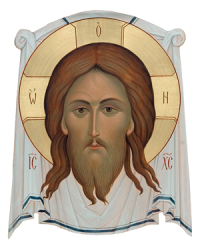

=/images/events/2024/05-01/_DSC0064.jpg;)